
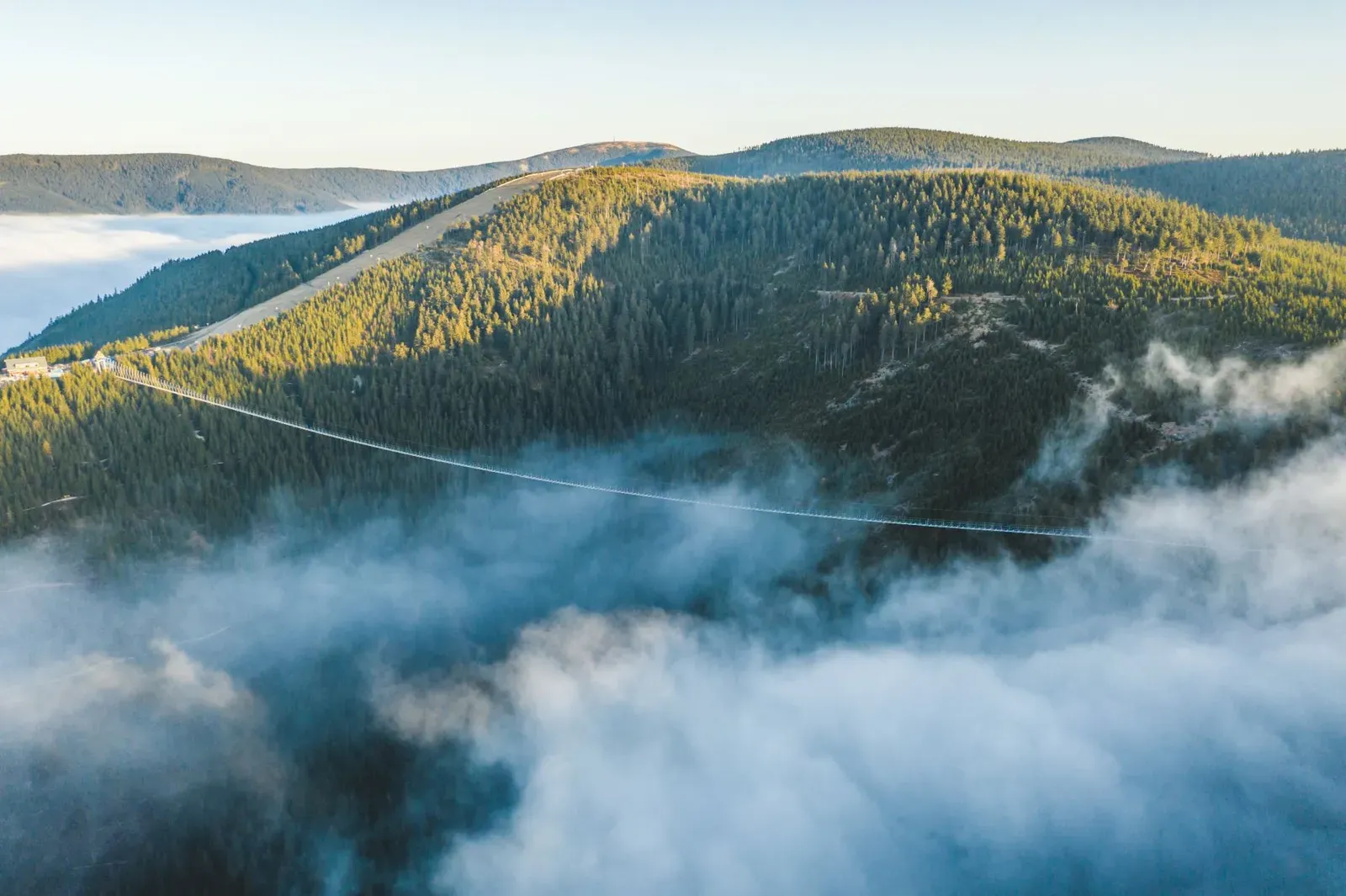
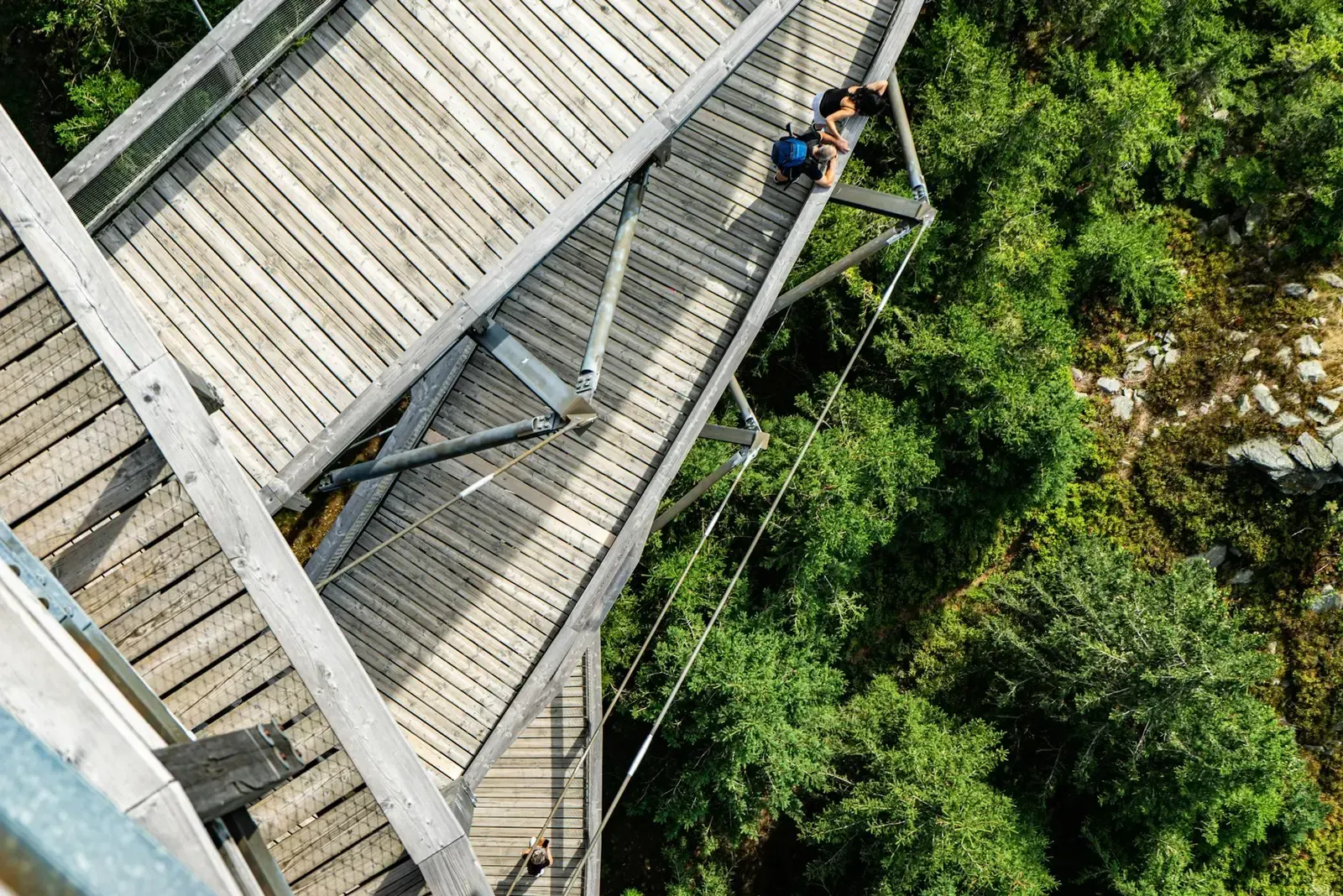
The wind hitting the steel cables of Sky Bridge 721 sounds exactly like a cello missing its lowest string. You feel the vibration through the open metal grating before you actually register the hundred-meter drop to the Králický Sněžník forest floor. Your stomach does the math a few seconds later. Hanging suspended between two mountain ridges on a 721-meter wire is an absurd engineering flex, and it sets the tone for Dolní Morava perfectly.
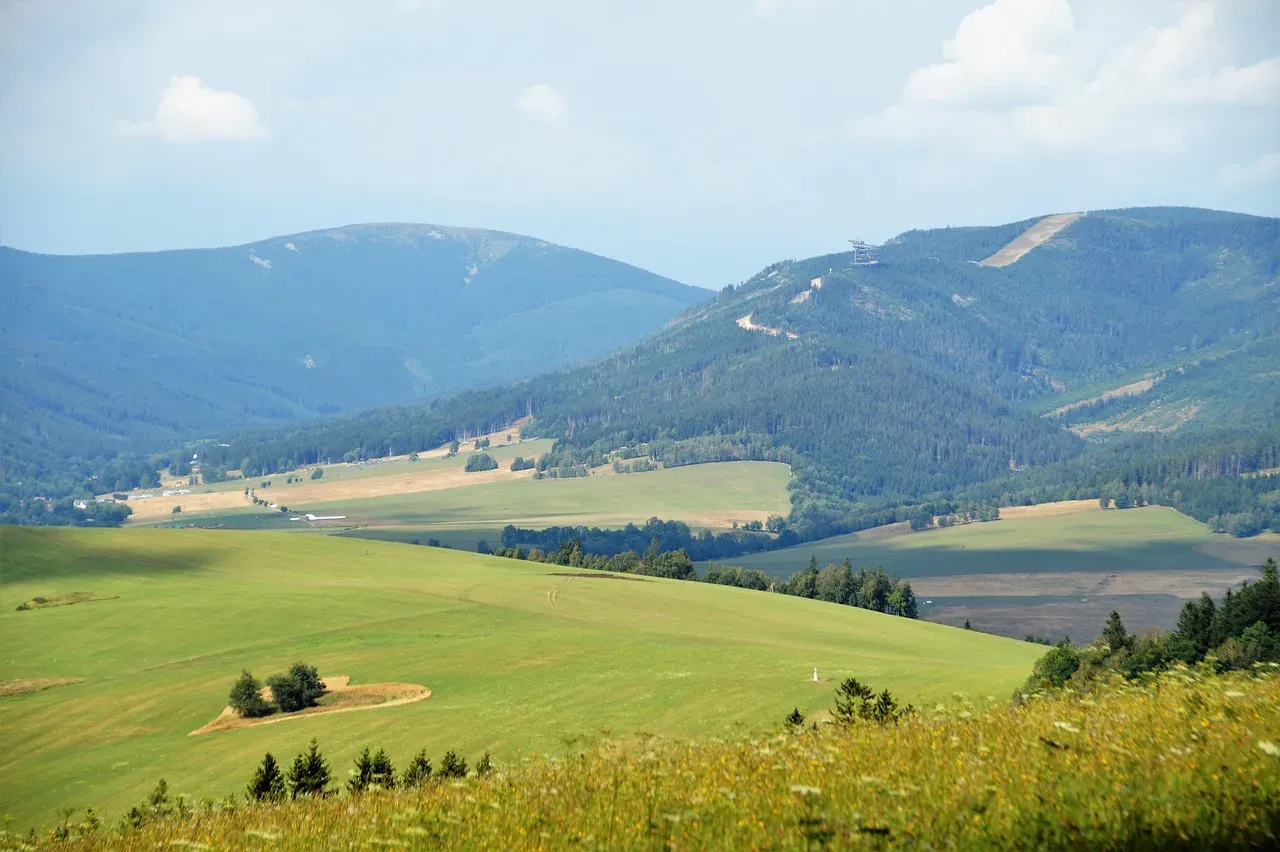
You arrive in this eastern corner of the Pardubice region expecting a sleepy logging town. Instead, you find a place where the weather turns hostile in twenty minutes and the infrastructure looks like it dropped out of a science fiction film. Dolní Morava sits right on the historical fault line between Bohemia and Moravia. Most people stay safely in Prague. They miss the highest, coldest edges of the country entirely.
Walking a 721-Meter Tightrope
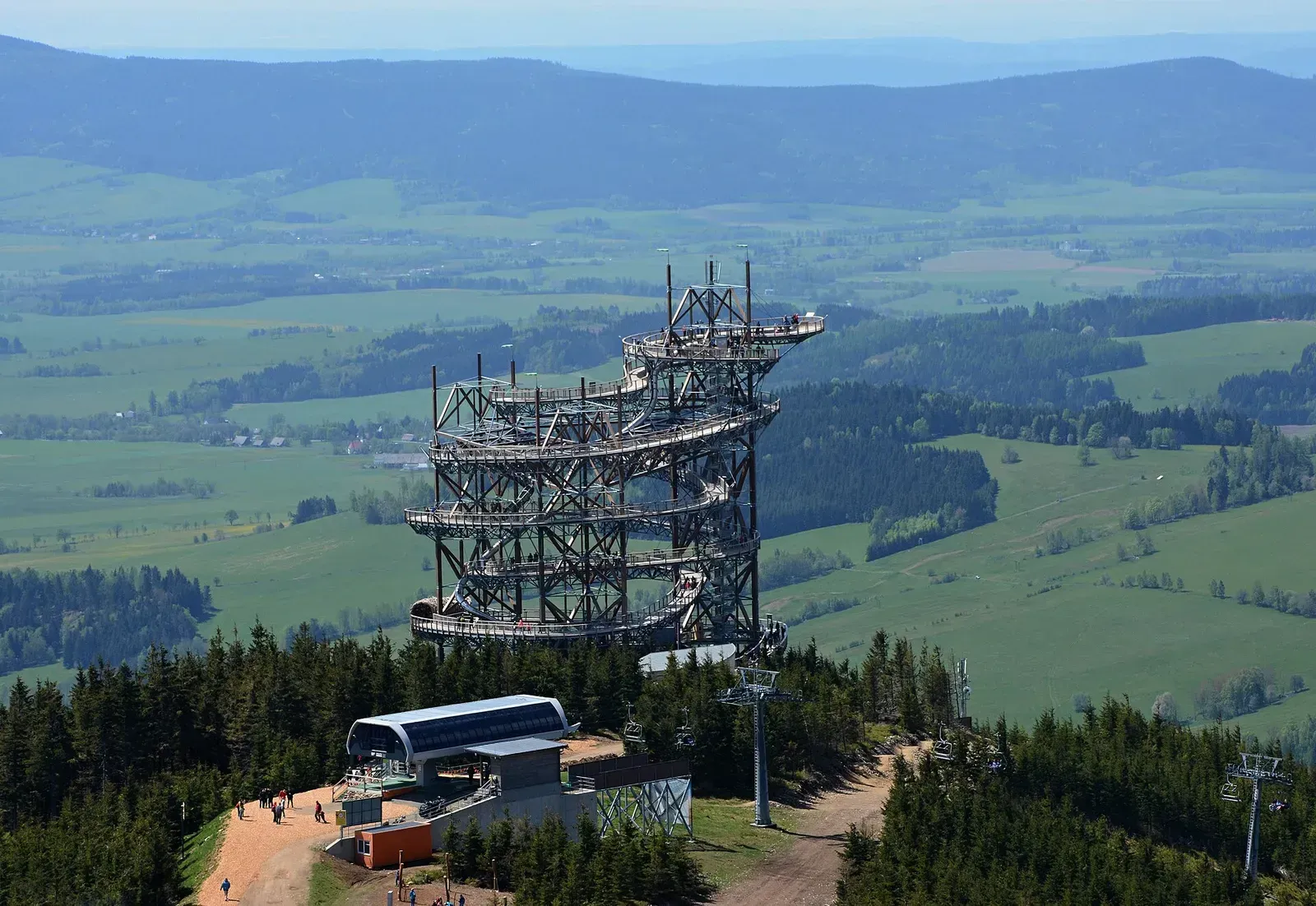
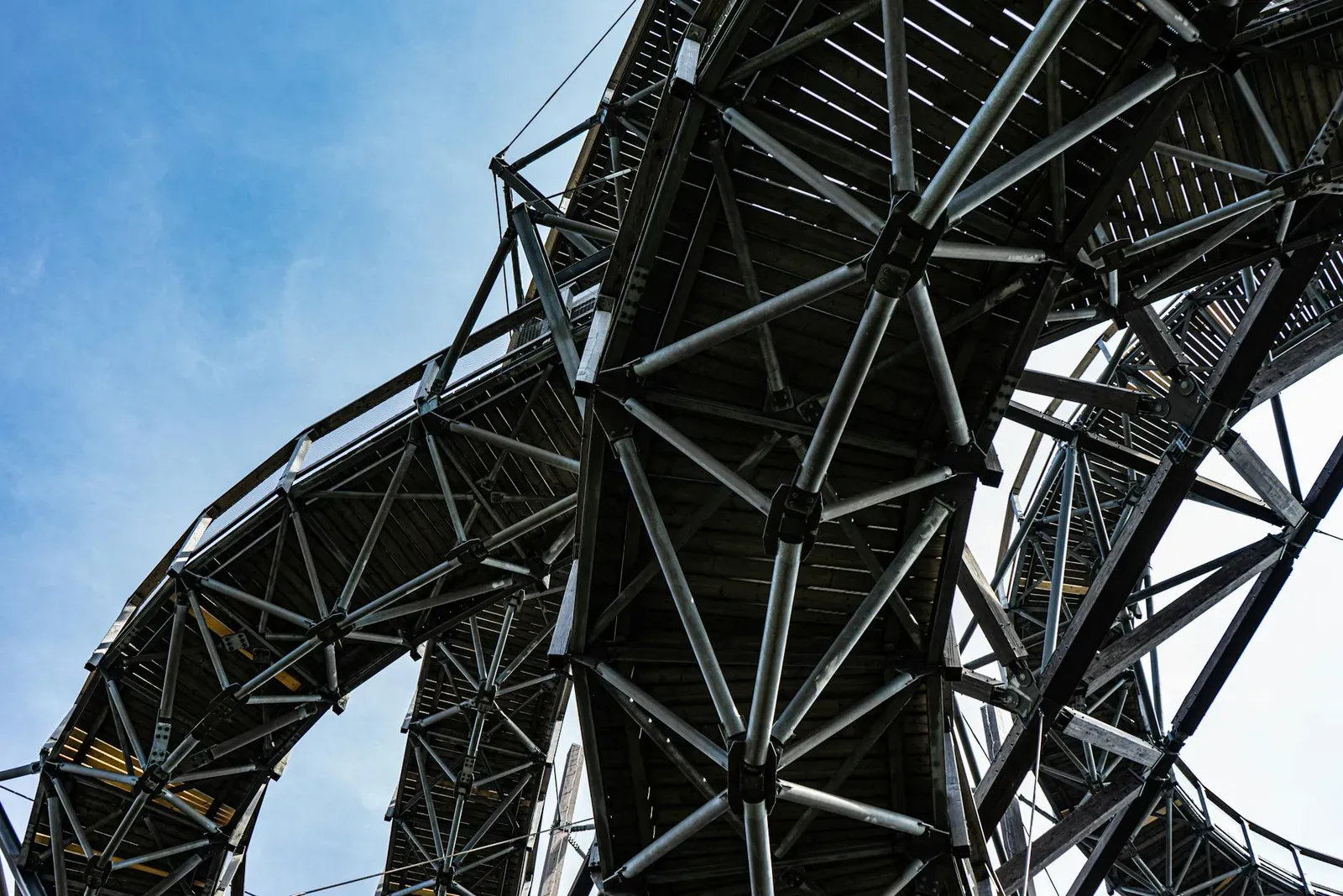
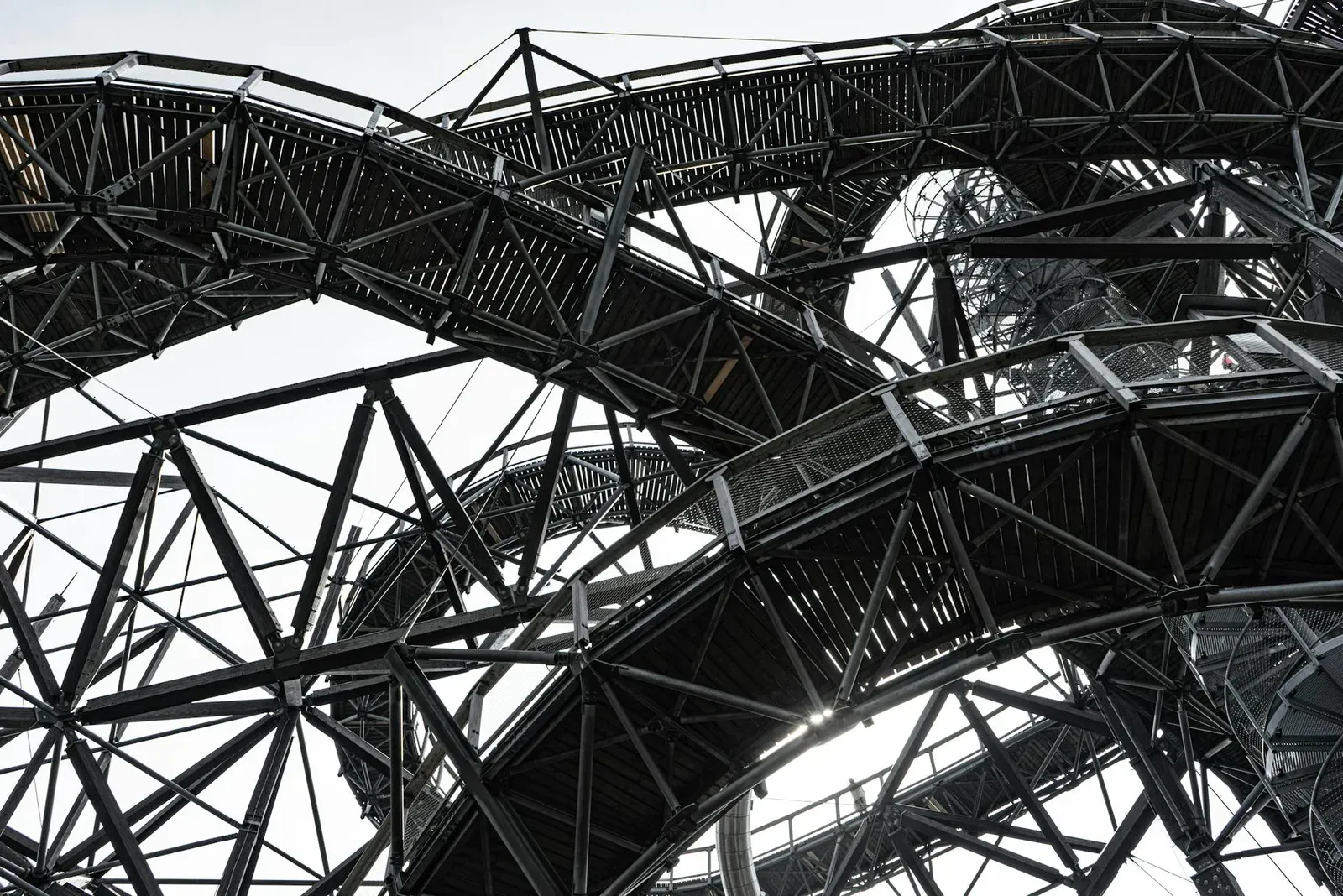
You have to ignore your own survival instincts to cross the longest suspension footbridge in the world. The structure moves with your weight in a slow, rhythmic bounce. I stopped near the middle to watch a hawk circling at eye level. To my left stood the Sky Walk. This massive wooden spiral rises out of the spruce trees like a roller coaster track. These structures are loud, metallic and completely unnatural. They also force you to look at the Králický Sněžník range differently. The peaks here form a continental watershed divide. The drops hitting my jacket were destined for three different seas. Depending on which side of the ridge the water lands, it flows toward the North Sea, the Baltic or the Black Sea.
Timber Sledges and Border Politics
I came down from the bridge and bought a black coffee at a concrete café near the ski lifts. An older guy named Oldřich was sitting outside. His face had the deep weathering of someone who had spent seven decades at high altitude. He started talking about the version of Dolní Morava that existed long before the chairlifts and glass-fronted hotels arrived. The Polish border is just a two-hour hike away. He explained how this valley was firmly part of the Sudetenland until 1945. The German-speaking population was expelled rapidly. Czech settlers moved into the empty houses. For fifty years, the local economy crawled along at the speed of horse-drawn timber sledges. The government ignored the region completely. Oldřich pointed his paper cup at the metal bridge above us. He saw the structure not as a tourist trap, but as proof that the rest of the country finally remembered this valley existed.
Finding the Start of the Morava River
The trail to the source of the Morava climbs steeply through dark spruce forests. Spongy, wet moss swallows the sound of your boots. The mechanized hum of the resort fades out after the first kilometer. You are left with the crunch of gravel and the loud, annoying call of nutcracker birds. I reached the spring an hour later. It's just a small stone well pushing freezing water out of the earth. The water tastes heavily of iron. Older guys in the village will tell you these woods belong to a mythical white deer. I only found three guys in hiking boots passing around a plastic bottle of Slivovice. They poured me a capful. It burned straight down to my stomach. We sat on a wet granite slab and they argued about logging quotas in the Králický Sněžník National Nature Reserve. They treat the mountain like their personal property.
Blueberries, Butter, and Caloric Survival
The temperature dropped ten degrees the second the sun dipped behind the ridge. I walked back into the village looking for heavy calories. Traditional Czech mountain food relies entirely on fat and sugar to keep you warm. I ordered borůvkové knedlíky at a pub packed with wet hiking gear. The plate arrived holding four massive yeast dumplings stuffed with intensely tart wild blueberries. They were drowning in melted butter and buried under a pile of grated hard curd cheese. You eat this meal with a spoon and accept the resulting lethargy. Dolní Morava runs on a strange social engine these days. Twenty-year-old seasonal workers pour beers for families who have lived in the valley since the 1950s. The tension between preserving a wild borderland and running a high-volume alpine resort is obvious in every conversation.
The Real Cost of Admission
Dolní Morava is trying to balance heavy tourism with a fragile alpine environment. It rarely gets the math perfectly right. You can help by ignoring the massive resort restaurants and spending your cash at independent pubs. Walk past the ticket booths and take the unmarked trails heading north toward the Polish markers. The appeal of this valley isn't just the adrenaline hardware bolted to the cliffs. It's the heavy history of the Sudetenland and the freezing spring water of the Morava River. Go walk the steel bridge, but don't pretend it's the only reason to drive up here.
Jan's Pro-Tip: Beat the Tour Buses
Sky Bridge 721 opens at 9:00 AM. Be in line at 8:45 AM. If you cross early, you can actually hear the wind hitting the cables and feel the terrifying sway of the engineering. By 10:30 AM, three hundred people with selfie sticks will be on the grating with you. The bridge stops feeling like a high-altitude expedition and starts feeling like a crowded subway car. Set your alarm.