
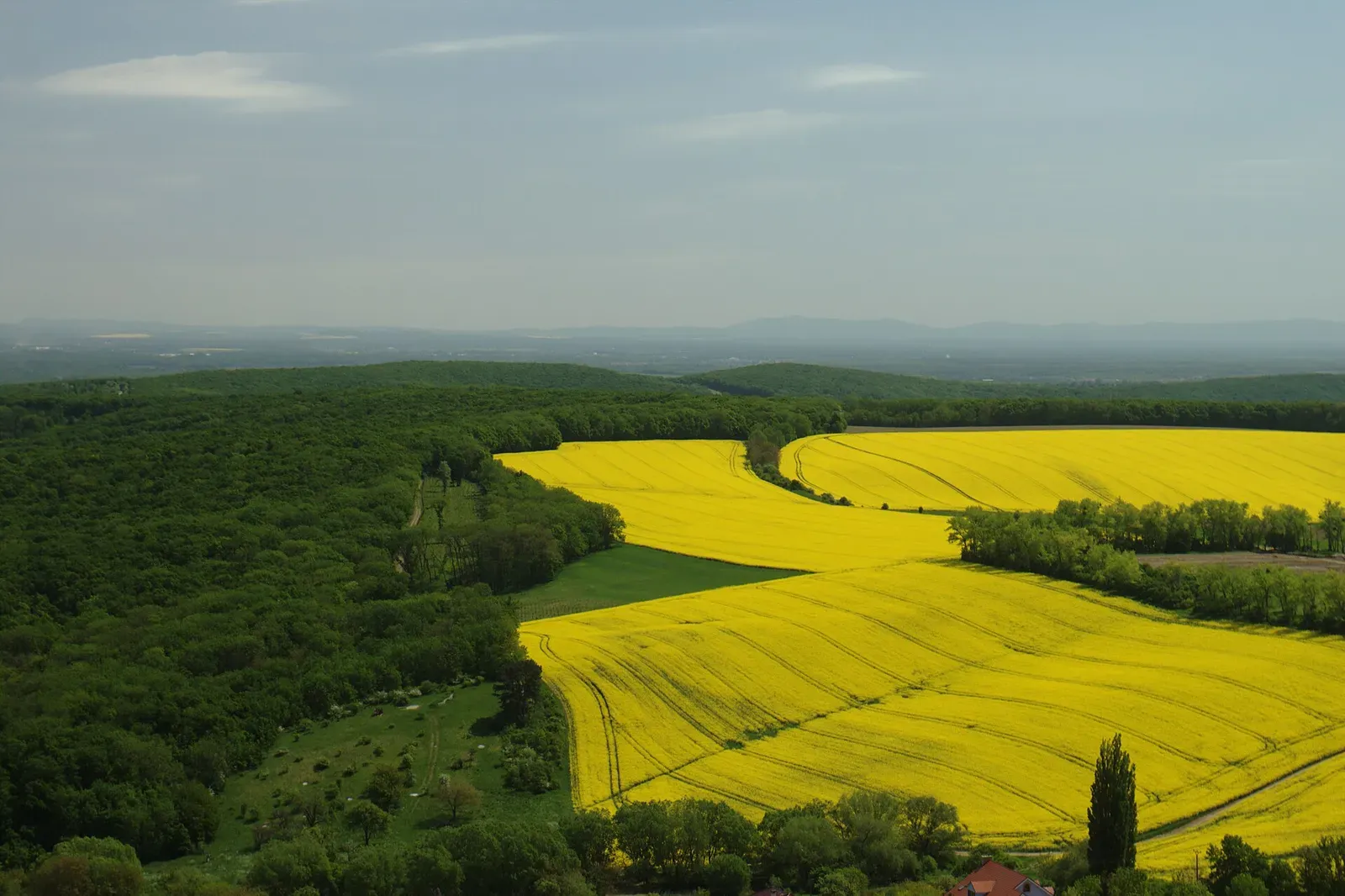
The dust on the path up Svatý kopeček is the color of crushed bone and fine enough to coat your boots the second you step off the pavement.
Midday in Mikulov smells like sun-baked wild thyme and the faint, dry sugar of ripening grapes. The bells of St. Sebastian’s Chapel ring out over the red roofs below, marking noon. The sun here feels Mediterranean, punishing the limestone and baking the soil until it cracks. Pálava refuses to look like the rest of the country.
The White Spine of South Moravia
The Pálava Hills jut out of the lower plains like a bleached skeleton. You will not find the damp, dark spruce forests of Bohemia here. As you climb toward the limestone crests, the air thins and the heat settles heavy on your shoulders. These hills form the extreme northern tip of the Alps, ground down over millennia. The calcium-heavy soil and the high temperatures support plant life found nowhere else in the republic. I stopped to look at small, stubborn yellow flowers forcing their way through fissures in the rock.
A hiker coming down the path pointed out a pale dwarf iris that only grows on these specific slopes. The region became a UNESCO Biosphere Reserve in the 1980s because the environment is surprisingly brittle. By late August, the spring colors burn off and the hills turn the shade of dead straw. The landscape resembles the arid islands off Croatia more than Central Europe. The rocks hold the heat long into the evening.
A Date with a 25,000-Year-Old Lady
The trail down toward Dolní Věstonice moves from botany into sheer, incomprehensible time. In a modest museum near the muddy banks of the Dyje River, archaeologists dug up the Venus of Dolní Věstonice. She is a soot-stained piece of fired clay and the oldest known ceramic figure on earth.
Looking at the museum's maps of paleolithic mammoth hunter camps, the physical continuity is jarring. Twenty-five thousand years ago, people sat right here, staring up at the exact same limestone face of Děvín peak. They shaped the wet earth nearby and fired it. The same dirt eventually supported Roman legions, who supposedly brought the first vines, and later Slavic tribes who dug hilltop forts into the ridges. A dying phone battery feels somewhat trivial when you are standing on a paleolithic garbage dump.
Swedish Cannons at Maidenburg
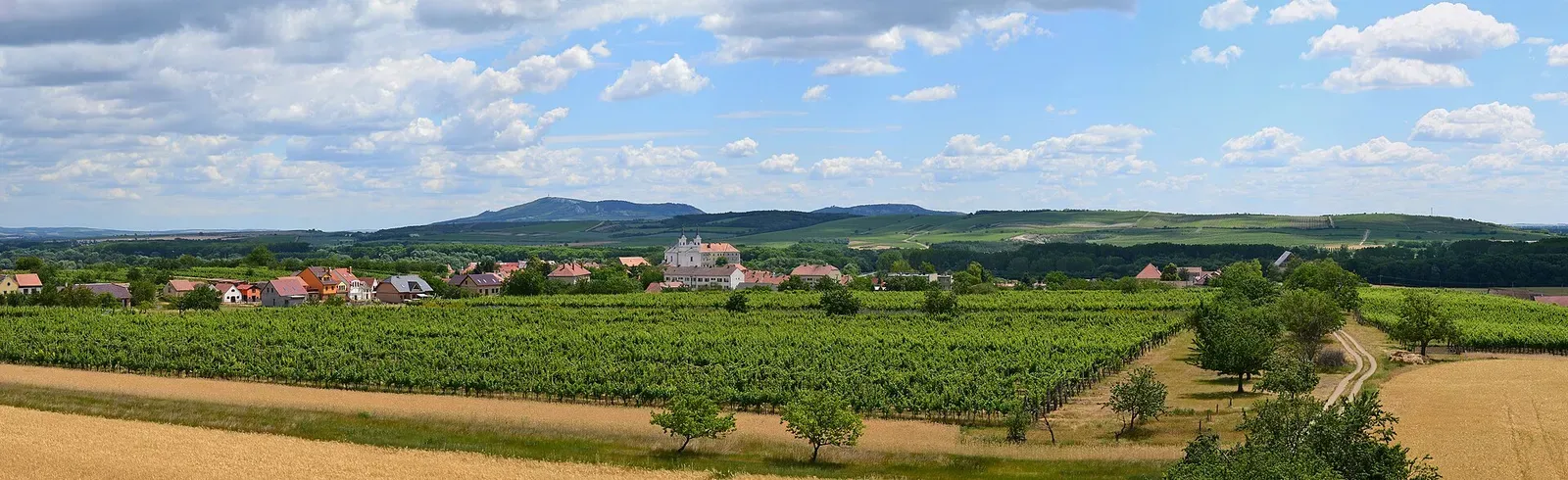
The path pitches upward again, ending at the ruins of Děvičky, or Maidenburg. The jagged stone walls grip the northern edge of the hills. The climb empties your lungs, but the peak offers a flat, total view of the landscape. The Nové Mlýny reservoirs sit on one side like sheets of tin. On the other, vineyards run in straight lines all the way to Austria.
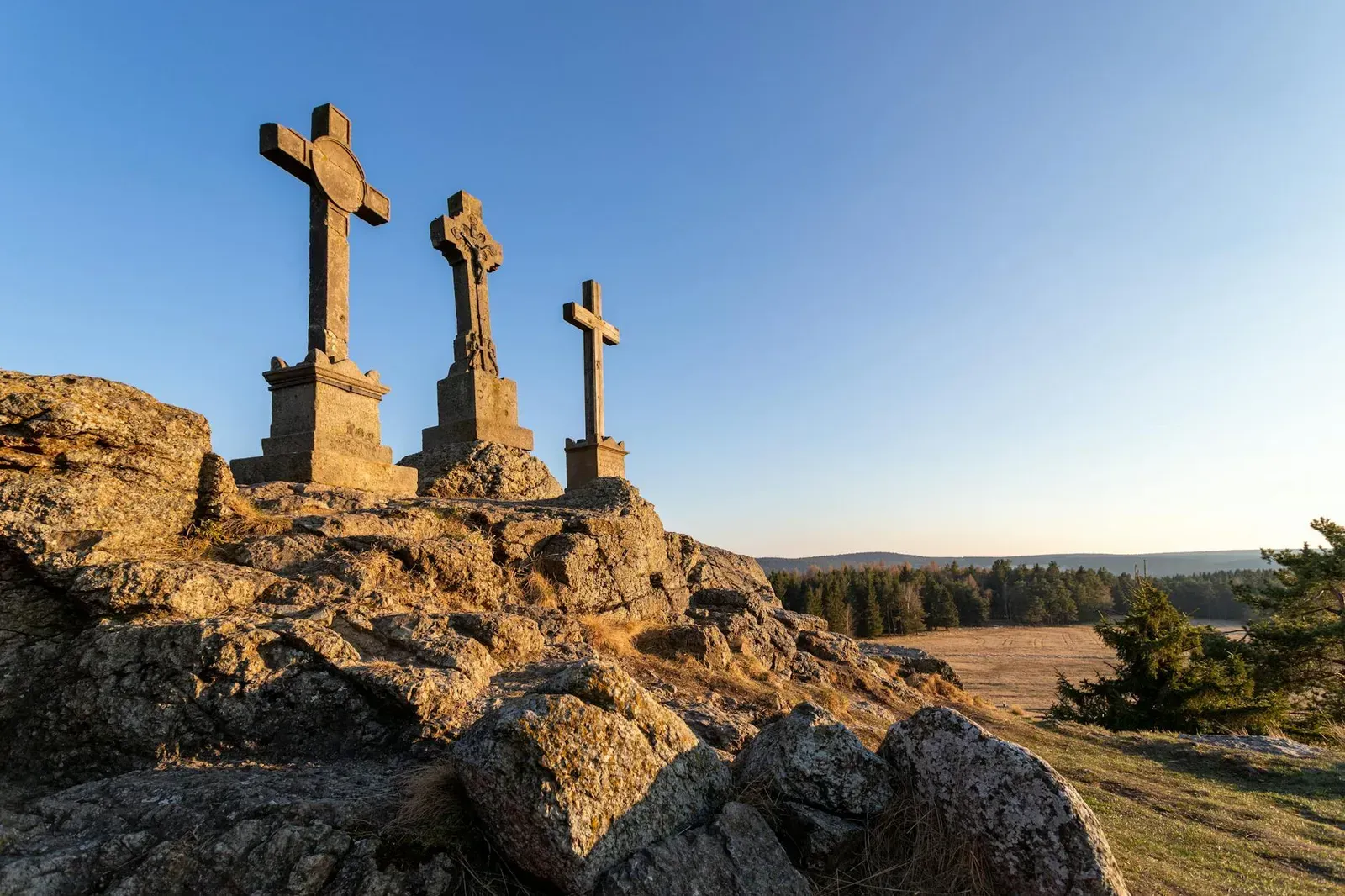
Built in the 13th century to watch the trade routes, the fortress died violently during the Thirty Years' War. Swedish troops took it in 1645 and burned it on their way out. Below the walls, three stone pillars jut out of the ground. Local legend claims they are three cursed sisters turned to rock, the kind of story every ruined castle in the country seems to require. I ate a stale sandwich on a low wall. The wind pushed through the empty windows, the only sound left in a fortress that spent generations preparing for war.
Limestone and Grüner Veltliner
By late afternoon, the trail drops into Pavlov. Tourist brochures sell this village as a romantic wine paradise of rolling green hills and easy afternoons. Half the town actually exists underground, built for grueling labor. Heavy wooden doors line the streets, opening directly into cool, damp arched cellars. I walked past a cellar where a third-generation winemaker named Petr was scrubbing down oak barrels with a stiff brush. He waved me inside, out of the glare. The air smelled sharply of old wood, wet stone, and fermenting fruit.
Petr pointed to the white rocks exposed in the dirt behind his house, laughing at the idea of a gentle harvest. The vines struggle in the limestone, which forces the roots deep into the rock just to survive. We sat at a scarred wooden table while he poured cold Veltlínské zelené. It tasted sharp, flinty, and completely dry. It tasted exactly like the chalky dust I had been swallowing all day. Petr talked about unpredictable rain and the changing climate without romanticizing the work. These cellars are practical spaces, built for storage and sweat, but they double as community halls. Neighbors come down here to argue, complain about the weather, drink, and sing in the thick local Moravian dialect.
The Dietrichstein Legacy in Mikulov
I caught a bus back to Mikulov before sunset. The Dietrichstein family ruled from the massive castle on the hill for hundreds of years, building a cosmopolitan town that feels completely out of place in agricultural Moravia. I walked through the Jewish Quarter and passed the restored synagogue. The plaques on the walls record a heavy history of German and Jewish populations erased by the 20th century.
I finished the day in the gardens of Mikulov Castle. The cellars hold one of the largest wooden wine barrels in Europe, built in 1643 and capable of holding 101,400 liters. The terrace is the better spot. People sit in the square below with coffee, in no rush to be anywhere. Prague operates on nervous energy. Mikulov operates on the slow, deliberate pace of a town that knows the harvest is still months away.
Jan's Pro-Tip: Buy Your Wine Underground
When you hike the Pálava ridges, stay on the marked dirt paths. The steppe flora is brittle, and heavy boots destroy months of growth in a single step. Skip the generic bottles in the town square shops. Walk down the side streets in Pavlov or Mikulov and buy your wine directly from the people hosing down the barrels, like Petr. It keeps the money in the neighborhood. You get better wine, and you usually get a story to go with it.