
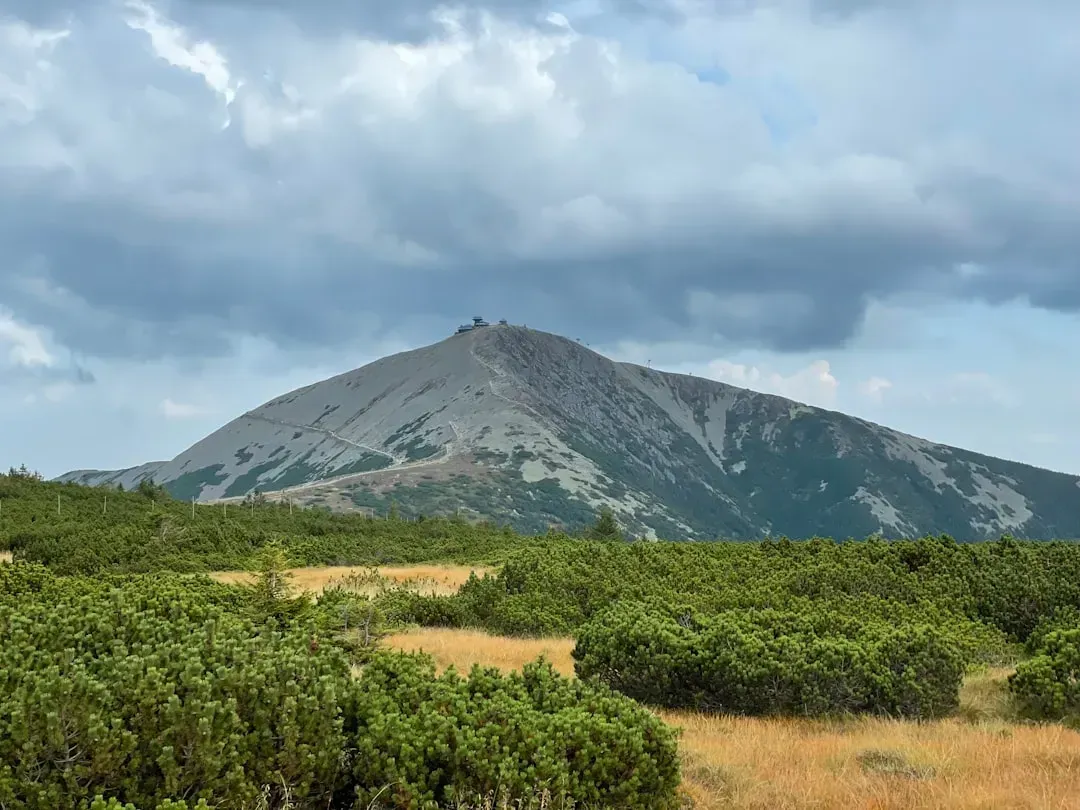
Everyone at the bottom of the Pec pod Sněžkou cable car at 8:00 AM in July makes the same mistake. They stand in line wearing shorts and carrying half-liter bottles of water. Two hours later at 1,603 meters, they will be violently shivering and desperately trying to hide behind a boulder from a wind manufactured in Svalbard.
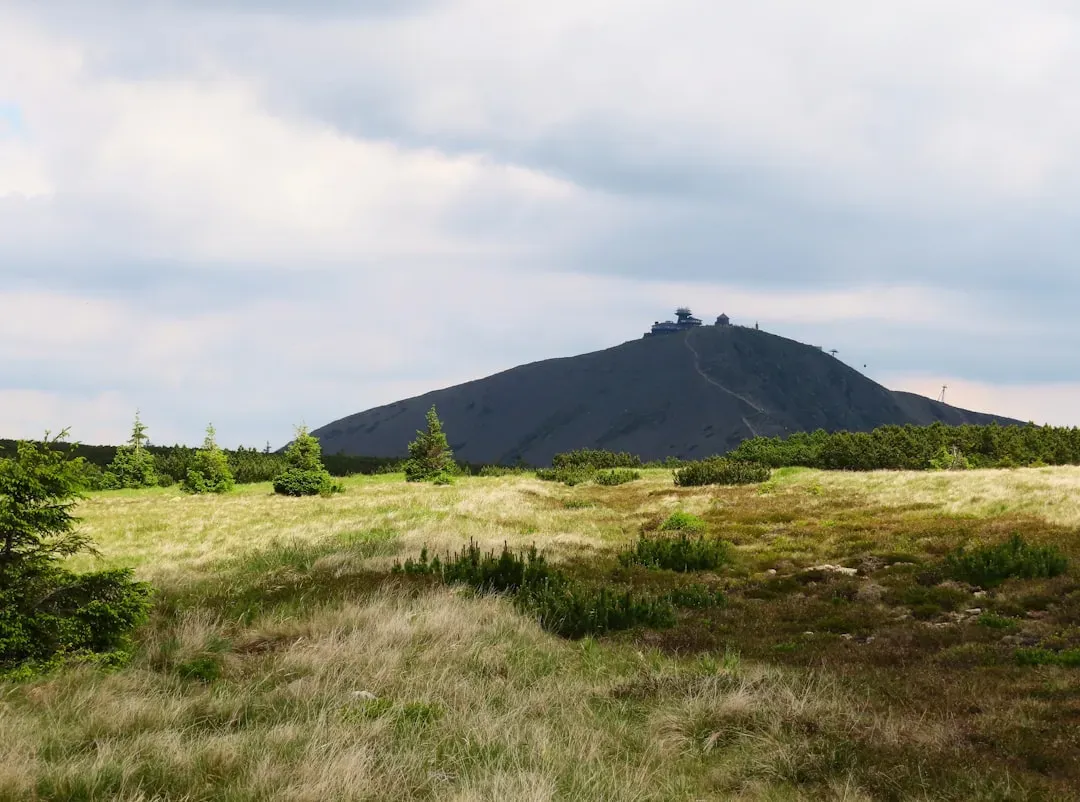
Sněžka is the highest point in the Czech Republic. It pins down the Polish border in the Krkonoše range. You can ride the gondola, or you can walk the steep rock path up through Obří důl. Walk it. Halfway up, Central Europe ceases to exist. The tree line cuts off sharply and a brutal alpine tundra ecosystem takes over. The summit is a bizarre plateau holding a 17th-century wooden chapel and a Polish observatory shaped like stacked flying saucers. The wind up here routinely knocks grown adults into the scree.
The Invisible Wall Above Obří důl
The shift happens suddenly. You leave the damp scent of spruce bark behind and the air turns thin. It carries the sharp metallic tang of cold granite. Then the wind hits. It does not blow. It shoves. Sněžka measures a modest 1,603 meters tall, yet it stands entirely isolated above the surrounding valleys. It catches every pressure system moving across the continent.
My coffee went cold before I had cleared the final timberline. Early mapmakers believed they were charting the physical edge of the world here. I leaned forward at a 45-degree angle just to walk a straight line toward the summit. Their confusion made perfect geographical sense.
Iron, Copper, and Stubborn Timber
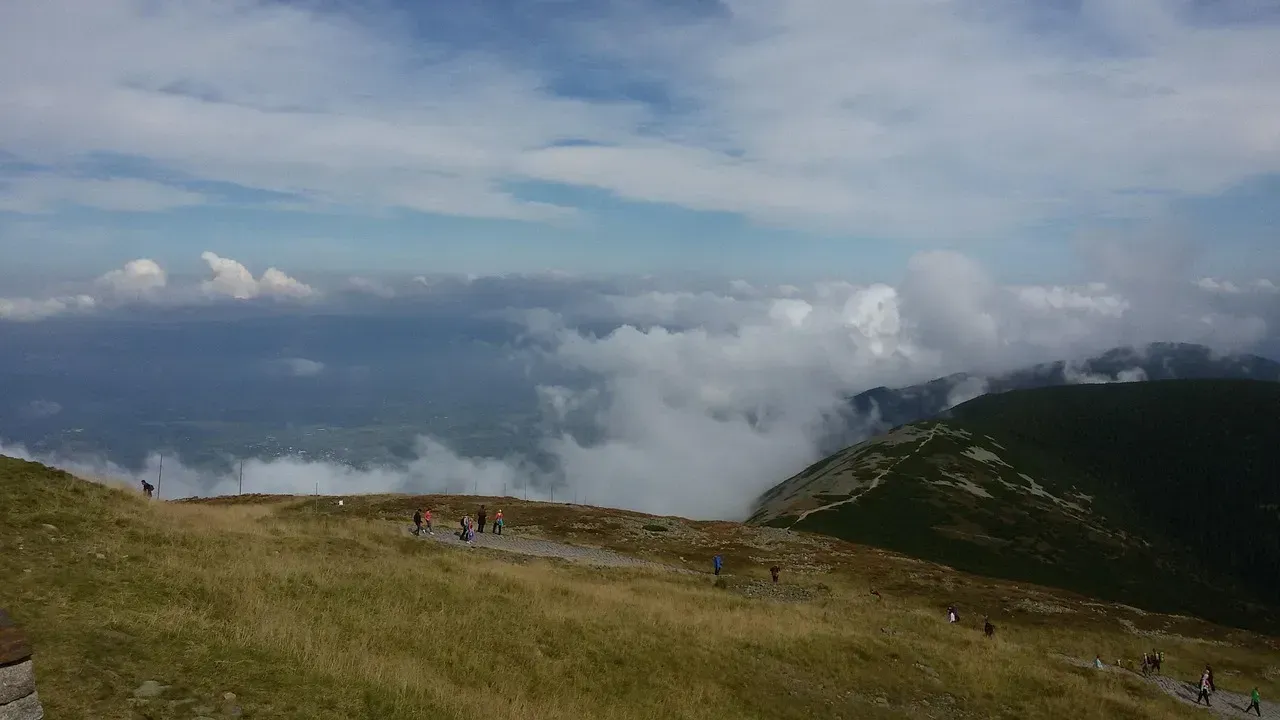
The first documented ascent of this peak had nothing to do with sightseeing. A Venetian merchant scrambled up the rock in 1456 hunting for precious stones. By the 1500s, men were dragging themselves up here to hack iron and copper out of the mountain. You walk past collapsed mine entrances in Obří důl and realize the misery of that labor in this specific climate is hard to overstate.
The summit itself is anchored by the Chapel of Saint Lawrence (Svatý Vavřinec). Ordered by a local nobleman named Schaffgotsch in 1665, it is a squat wooden cylinder bolted directly to the granite. It has absorbed over 350 winters of hurricane-force gales and horizontal ice. People were climbing up here to pray a long time before anyone thought to take a photograph.
An Arctic Island Stranded in Bohemia
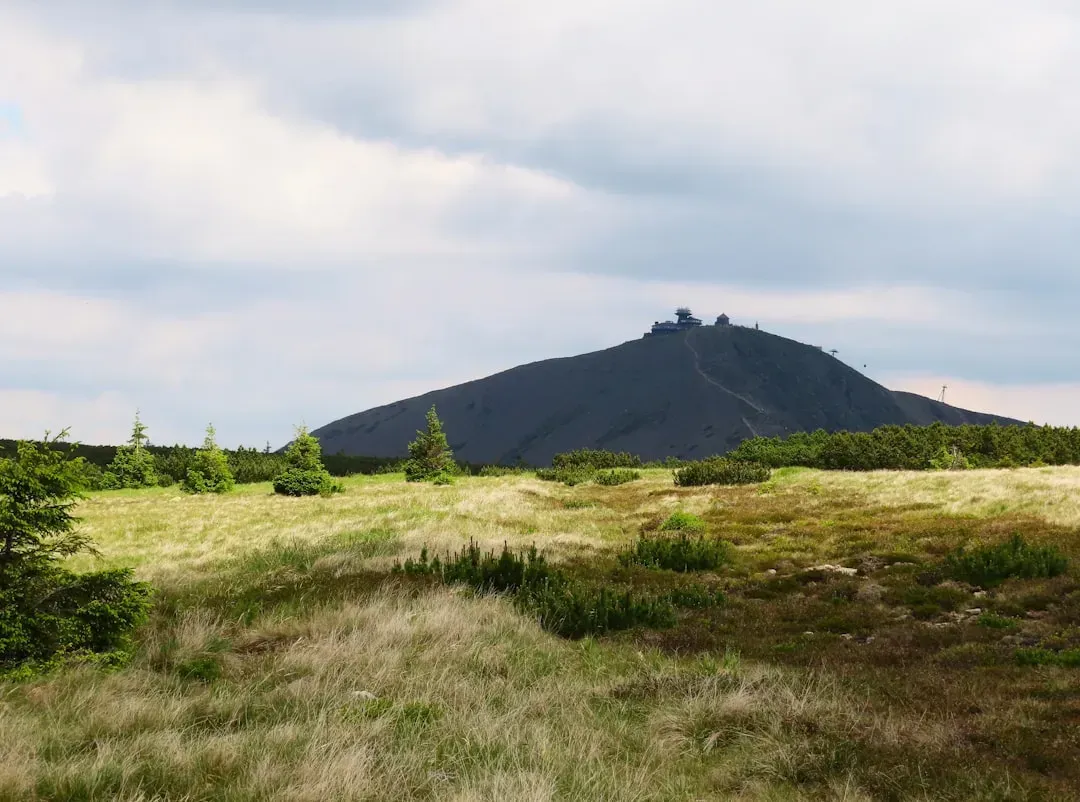
The top of Sněžka is a biological anomaly. The sheer cold and relentless wind strip away any chance for trees to take root. Your boots crunch past a tough carpet of rare mosses and lichens. This is an alpine tundra ecosystem left behind by the final retreat of the glaciers. Normally you would need to drive to northern Scandinavia to find this exact dirt.
I knelt behind a stone marker to escape the gale and watched a white Narcissus-flowered Anemone shaking violently in the rocks. It looks too fragile to survive an afternoon here, let alone a season. The Krkonoše National Park (KRNAP) enforces the boundaries with heavy iron chains. These metal barriers are not for your safety. They exist entirely to stop human boots from pulverizing ten thousand years of biological geography into dust.
Spaceships, Postcards, and the Polish Border
The border between the Czech Republic and Poland literally splits the summit. You can stand with a boot in each nation. It is a geographic novelty that somehow never loses its appeal. But the architecture up here completely ignores the extreme natural environment.
The Polish meteorological observatory was constructed in the 1970s. It consists of three silver disc-shaped modules stacked on top of each other. It looks exactly like a grounded Soviet-era spacecraft parked fifty meters from a 17th-century chapel. On the Czech side sits the Poštovna Anežka, a contemporary timber-and-glass post office anchored into the rock by steel cables. I bought a postcard and sat inside. A thick white fog swallowed the window. Three minutes later, the air violently cleared to reveal hundreds of square kilometers of flat Polish plains to the north and deep green Bohemian valleys dropping away to the south.
The Descent Through the Krummholz
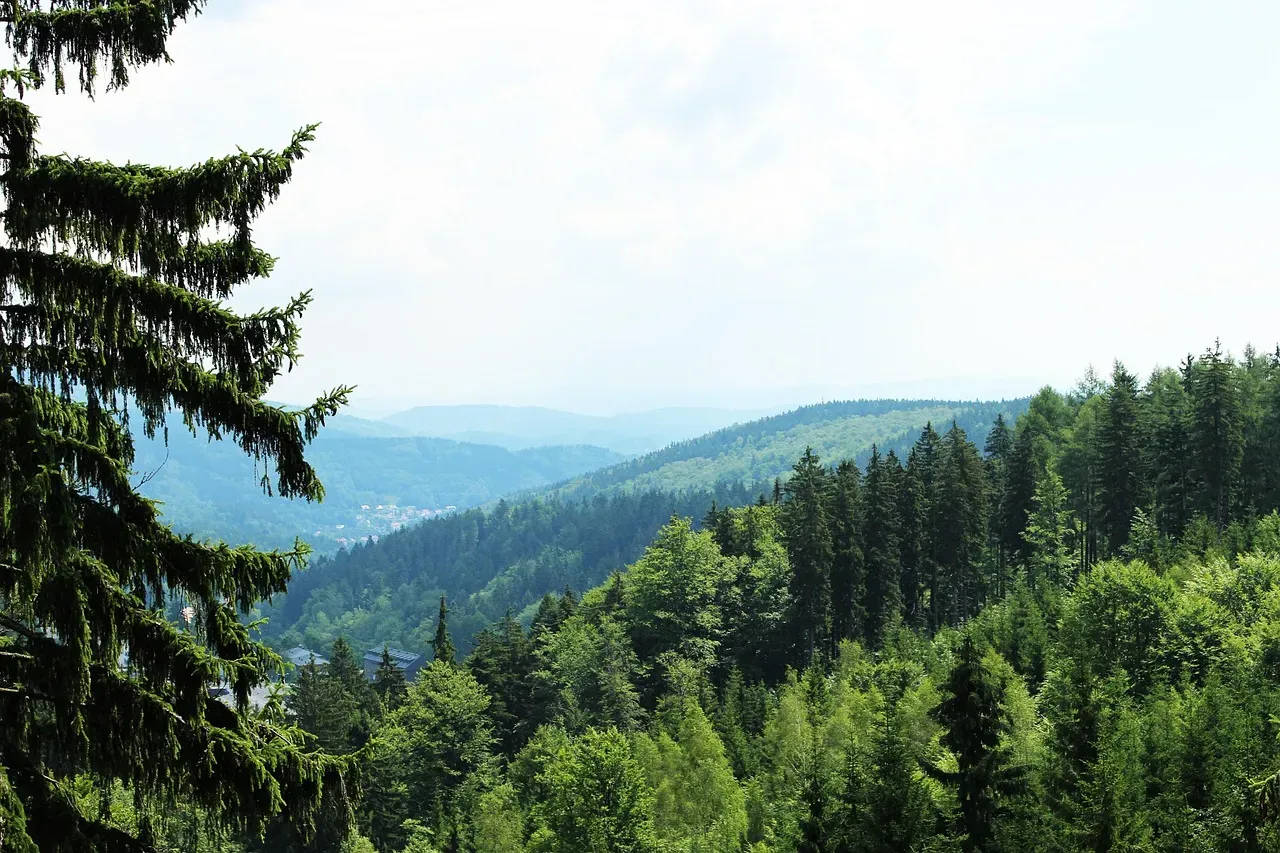
The descent via the Růžová hora route drops you back below the tree line with surprising speed. The wind suddenly cuts out. The low Krummholz pines are permanently twisted by the gales. They gradually give way to tall and straight spruce trunks.
Sněžka absorbs thousands of hikers on a busy summer weekend. The mountain only tolerates this traffic because of a rigid conservation culture enforced by KRNAP rangers and the Mountain Rescue Service (Horská služba). They maintain the rocky staircases and patrol the access rules. That hard labor is the only reason the mountain avens still bloom in May and why the scree fields haven't completely eroded under the weight of a million climbing boots.
Jan's Pro-Tip: Respect the Tundra and the Rangers
The weather in the valley means absolutely nothing. If it is 25°C and perfectly clear at the base in Pec pod Sněžkou, expect it to be 4°C with horizontal rain at the summit. Pack a windproof shell and a heavy mid-layer even in August.
Stay exactly on the marked rock paths. If you need to let a faster climber pass on the narrow sections above Obří důl, wait on the larger stones. The KRNAP rangers do not give warnings. They issue heavy fines on the spot if they catch your boots touching the protected tundra.