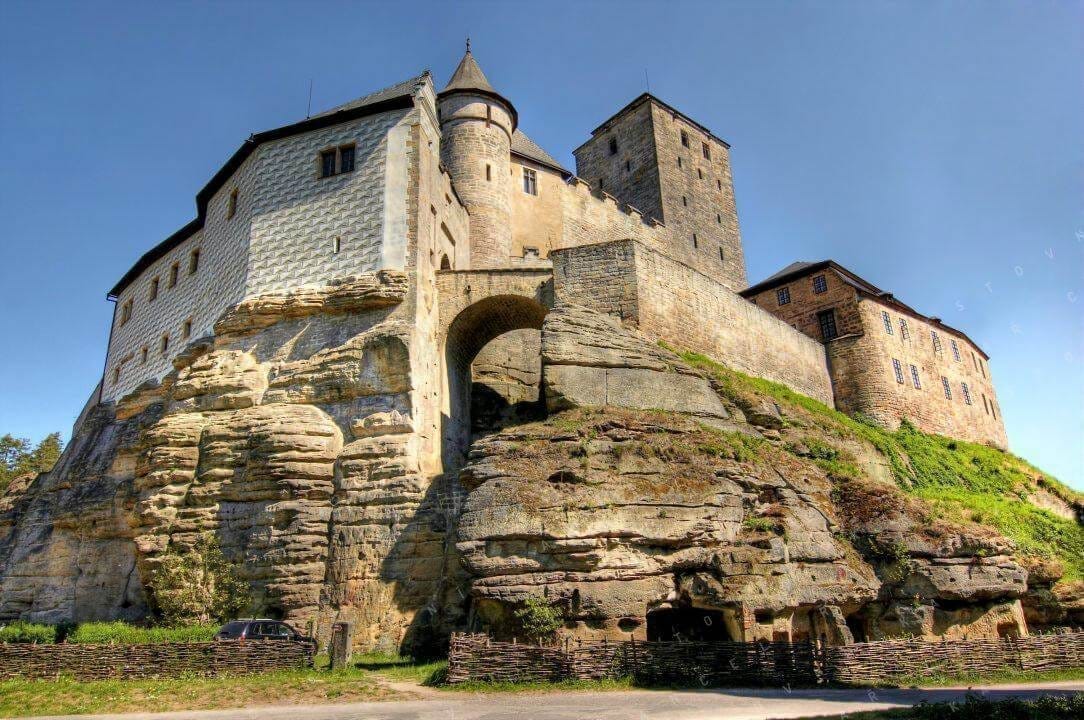
The name "Kost" means "bone" in Czech, and when you see the castle for the first time, you get it. It’s hard, grey, and looks like it could survive just about anything. Legend has it that the famous Hussite general Jan Žižka once tried to take the place and failed. Frustrated, he supposedly barked, "The castle is as hard as bone, and that belongs only to a dog!" and marched his army away.
Whether or not Žižka actually said it, the name is older than the legend. The founder, Beneš of Vartenberk, signed his name as *Benesius de Costi* back in 1349. While most Bohemian castles sit on high peaks to be seen from miles away, Kost is tucked into a valley, hidden until you’re practically at the front door. This wasn't a mistake; it was a clever defensive move. You can't hit what you can't see.
Defense by Design: The Water Trap
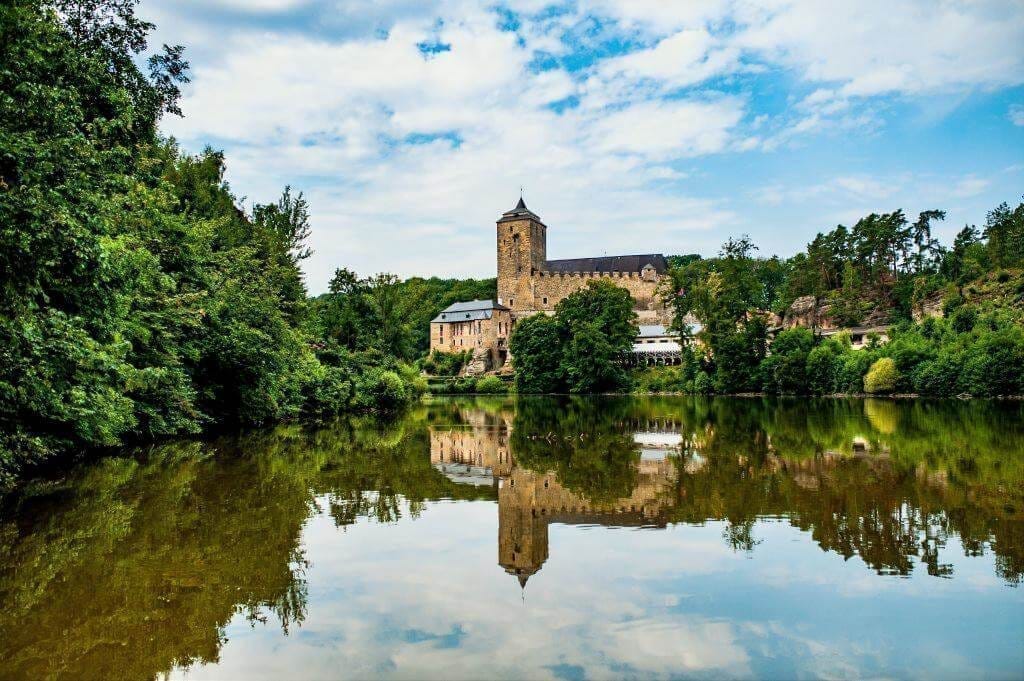
The geography here is the real star of the show. Kost sits right where three valleys meet, surrounded by a series of ponds—Bílý (White), Černý (Black), and Labutí (Swan). Back in the 14th century, these weren't just for the scenery. They were part of a massive water defense system. If an army tried to attack, the owners could basically pull the plugs on the dams and flood the valleys, turning the entire approach into an impassable swamp. It’s a brilliant bit of medieval engineering that used the land itself as a weapon.
When you walk into the main courtyard, take a second to really look at the thickness of the walls. There are narrow arrow slits everywhere, reminding you that for most of its life, this place was a hardened military zone. It’s a physical lesson in medieval priorities. You didn't build for comfort or "vistas"; you built so that nobody—not even the legendary Jan Žižka—could get in.
The Trapezoidal Tower: An Optical Illusion
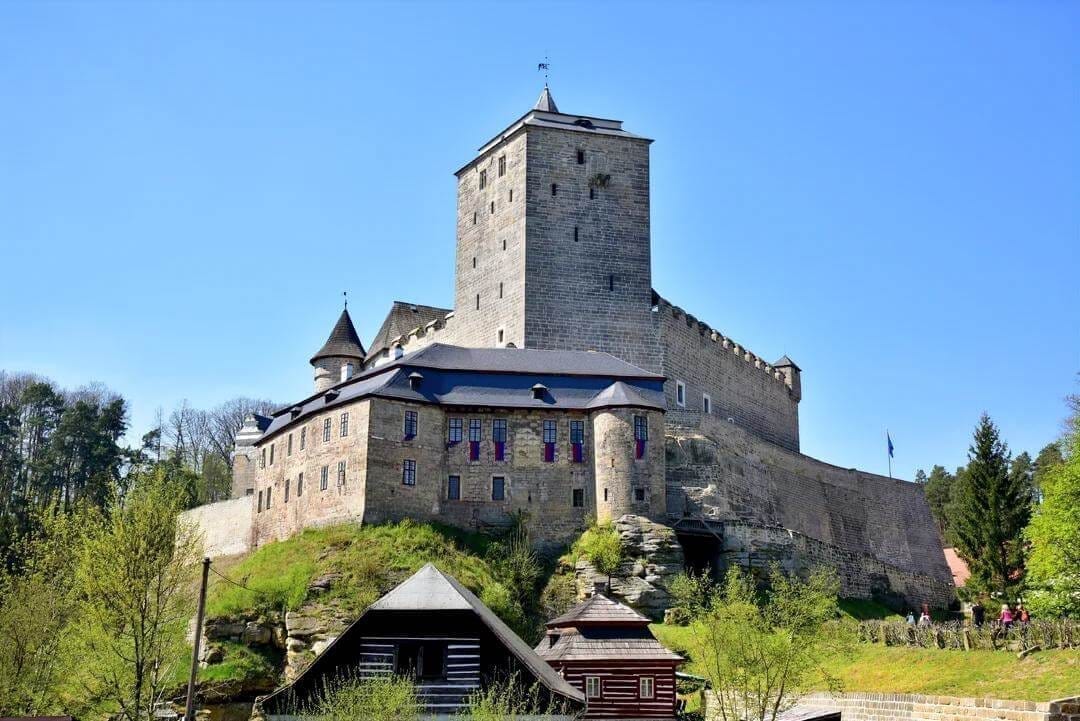
Inside, the most famous feature is the 'White Tower' (Bílá Věž). If you look up at it, you’ll notice something weird—it’s not a square or a circle. It’s a trapezoid. This wasn't an architectural whim; it was high-tech defense. The corners are angled so that if a catapult or a cannon fired at it, the missiles would strike at an angle and glance off the walls rather than hitting them head-on. It’s also an optical illusion: from certain spots in the valley, only two walls are visible, making it almost impossible for attackers to gauge the tower's true size or orientation.
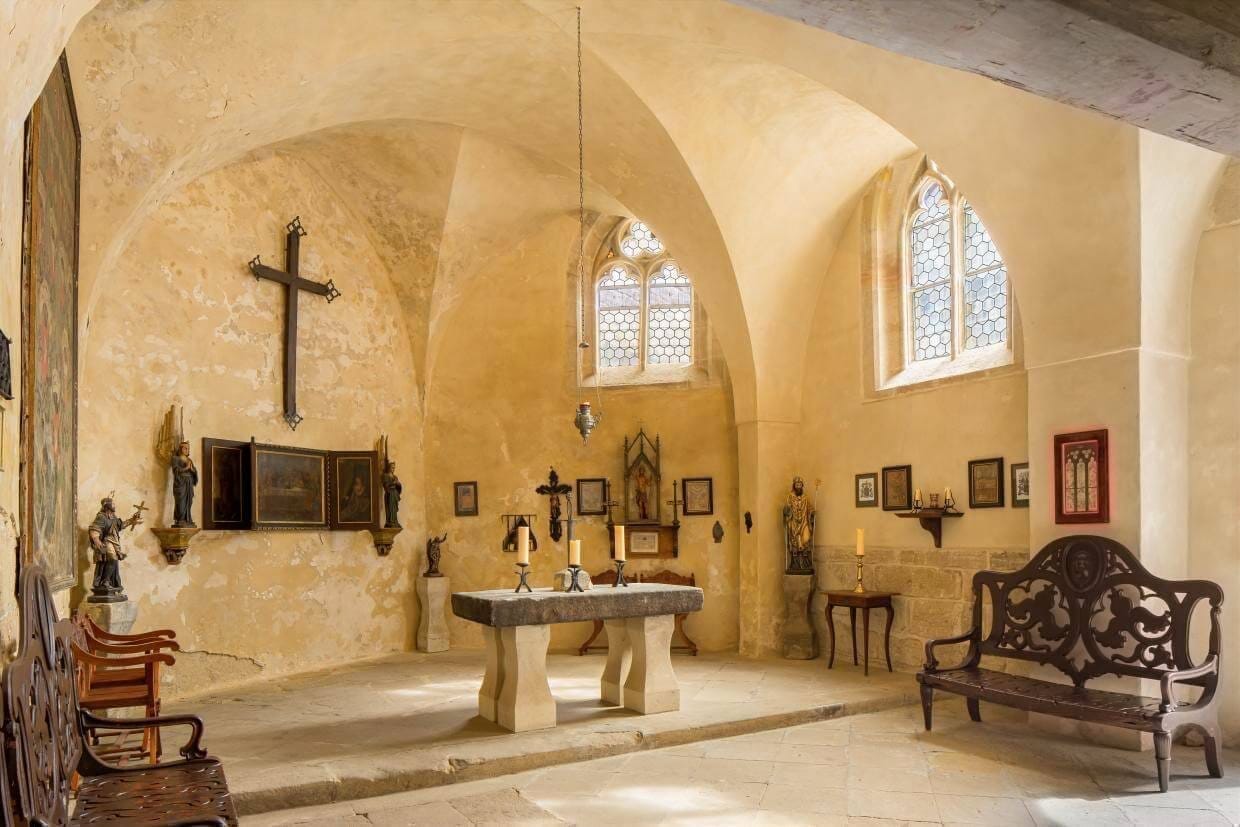
As you move through the rooms, you can see where different noble families left their mark. The Biberštejns added a residential wing in the 1500s, and the Lobkovics family built some of the outbuildings later on. You end up with this strange, cool mix of styles—Gothic, Renaissance, and even some Romanesque bits—all working together. It’s not a clean, unified look, but that’s what makes it interesting. It’s a five-hundred-year record of people trying to make a stone fortress feel like a home.
Fire, Decay, and the Return of the Bone
Kost wasn't always this well-kept. After the Thirty Years’ War, it was seized by Swedish troops, and once they left, it fell into a long period of decay. For a while, it was almost completely forgotten. The grand halls were empty, the roofs started to sag, and the nobles moved on to fancier, modern palaces. But the "Bone" was too solid to simply vanish.
The modern era brought its own drama. On September 27, 1946, a massive fire broke out, destroying the roof of the Bibrštejn Palace. While devastating, it actually pushed the government to start the first real, scientific restoration projects in the 1950s. Today, the work is overseen by the National Heritage Institute. When I was there recently, I saw some of the newer masonry from a project finished in 2020. They’re using modern tech to survey the stone, trying to keep the original surfaces intact without making it look like a Disney reconstruction.
Jan's Pro-Tip: Beyond the Gates
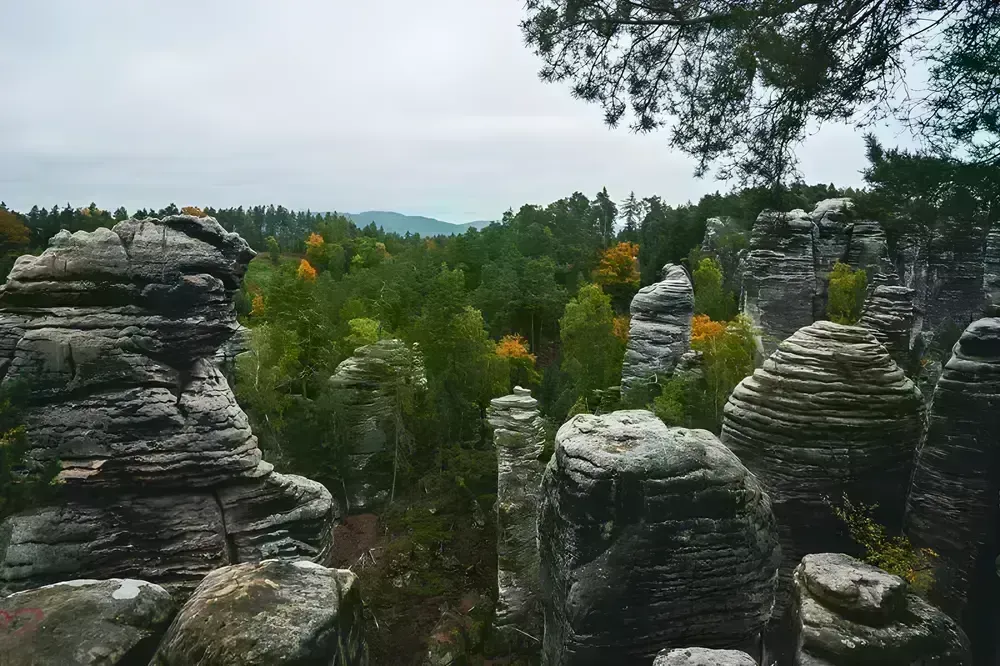
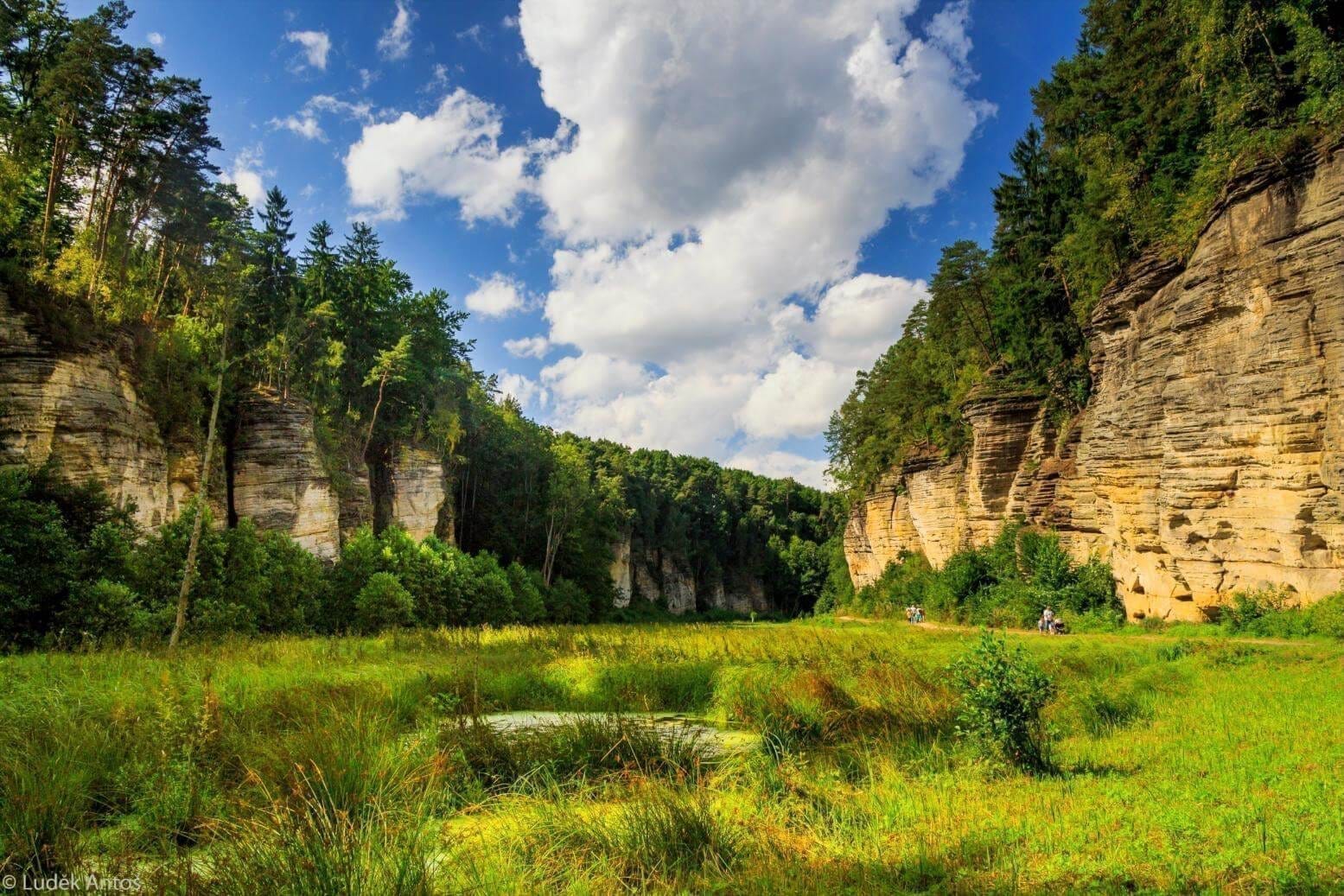
If you're heading to Kost, don't just do the tour and leave. Some of the best parts of the area are hidden in the valleys around the castle. Walk down into the **Plakánek Valley**—a narrow, romantic gorge that leads away from the castle. You’ll find the Roubenka spring and some incredible sandstone formations. If you have a car, drive a few minutes to **Věžický rybník**, a pond where the rocks rise directly out of the water. It’s so picturesque that it’s been used in dozens of Czech films.
I also recommend stopping by **Kopicův statek**, a traditional timbered farmstead nearby. There’s a short trail behind it where a local folk artist spent years carving reliefs of Czech historical figures directly into the sandstone cliffs. It’s one of those "only in Bohemia" spots that you’ll never find in a standard guidebook.
Bohemian Paradise, Properly Explored
As I hiked out of the valley, looking back at those white walls, I realized that Kost is a lesson in sticking around. It’s survived wars, fires, and centuries of being ignored, and it’s still here, looking just as tough as ever. It’s a reminder that sometimes the best way to last is to just be solid.
The castle is part of the Bohemian Paradise UNESCO Global Geopark, and once you step back from the walls, the wider region opens up fast. In one direction you have deep sandstone valleys and quiet pond circuits; in another, volcanic silhouettes like Trosky and broad viewpoints that let you trace the whole landscape in layers.
If you can, give yourself a full day here and use Kost as your base for the wider geopark. Beyond the castle zone, Bohemian Paradise opens into a network of sandstone rock cities and ridgeline viewpoints—places like Prachovské skály and Hruboskalsko, where narrow corridors, tall towers, and forest paths create a completely different rhythm from the valley floor. Pairing one of those rock-city hikes with Kost gives you the best of both worlds: military medieval history in the morning, and the region’s most iconic natural formations in the afternoon.