
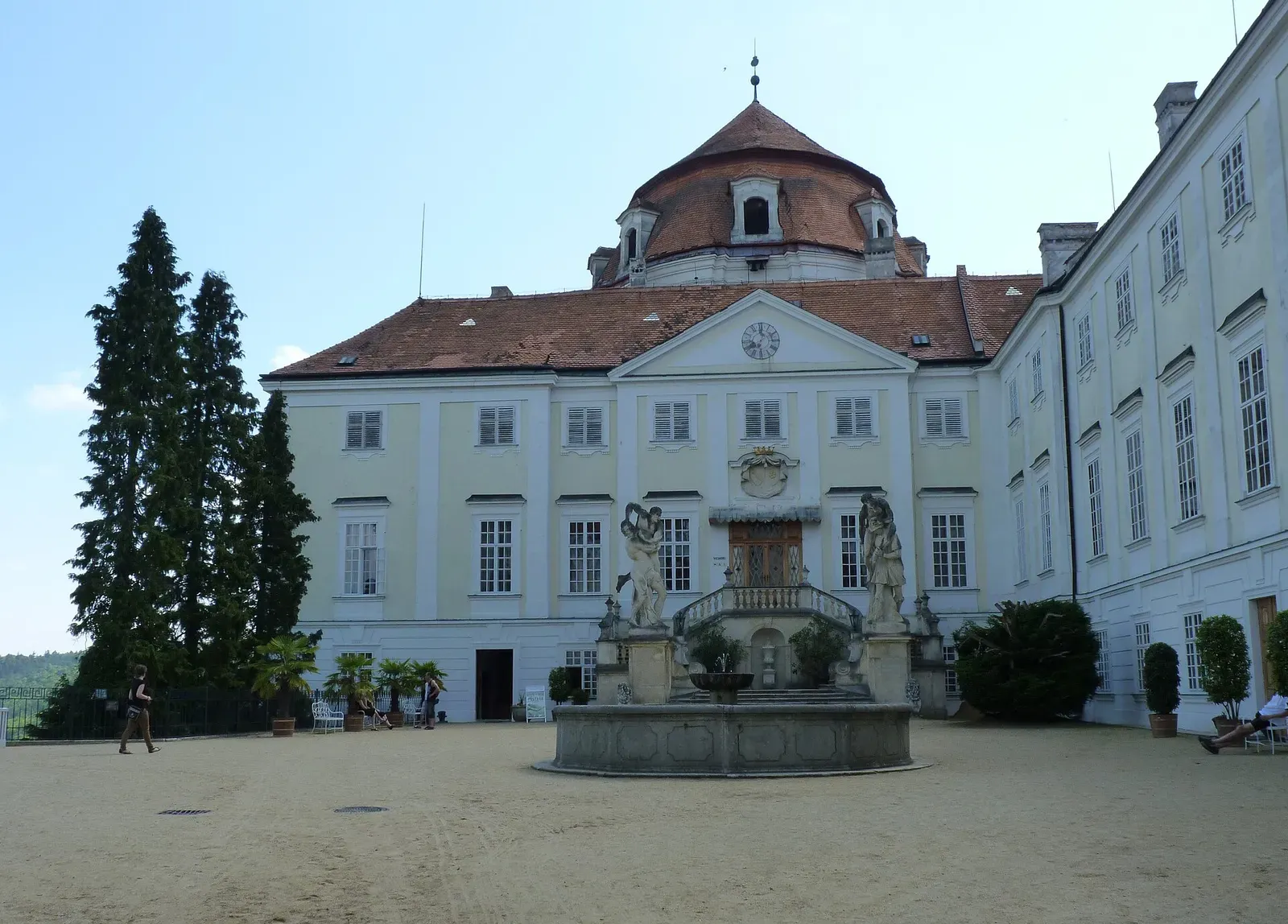
The map promised a flat, predictable trudge through wheat and rapeseed fields, a South Moravian lie that lasts exactly until the earth cracks open at the edge of the Dyje valley. The objective was to find the Hall of Ancestors, a room built to defy gravity and humility, but the obstacle was the geography itself.
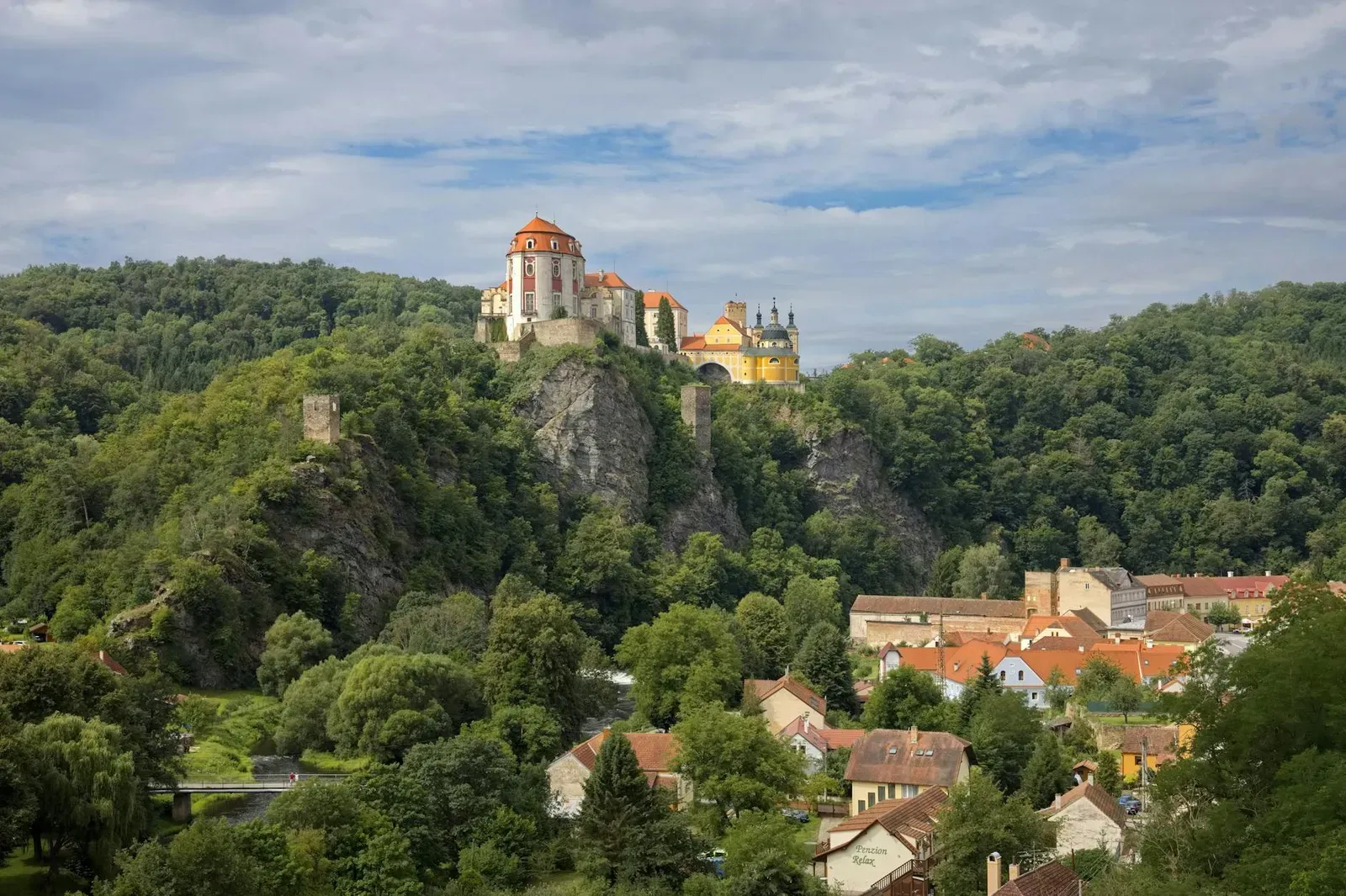
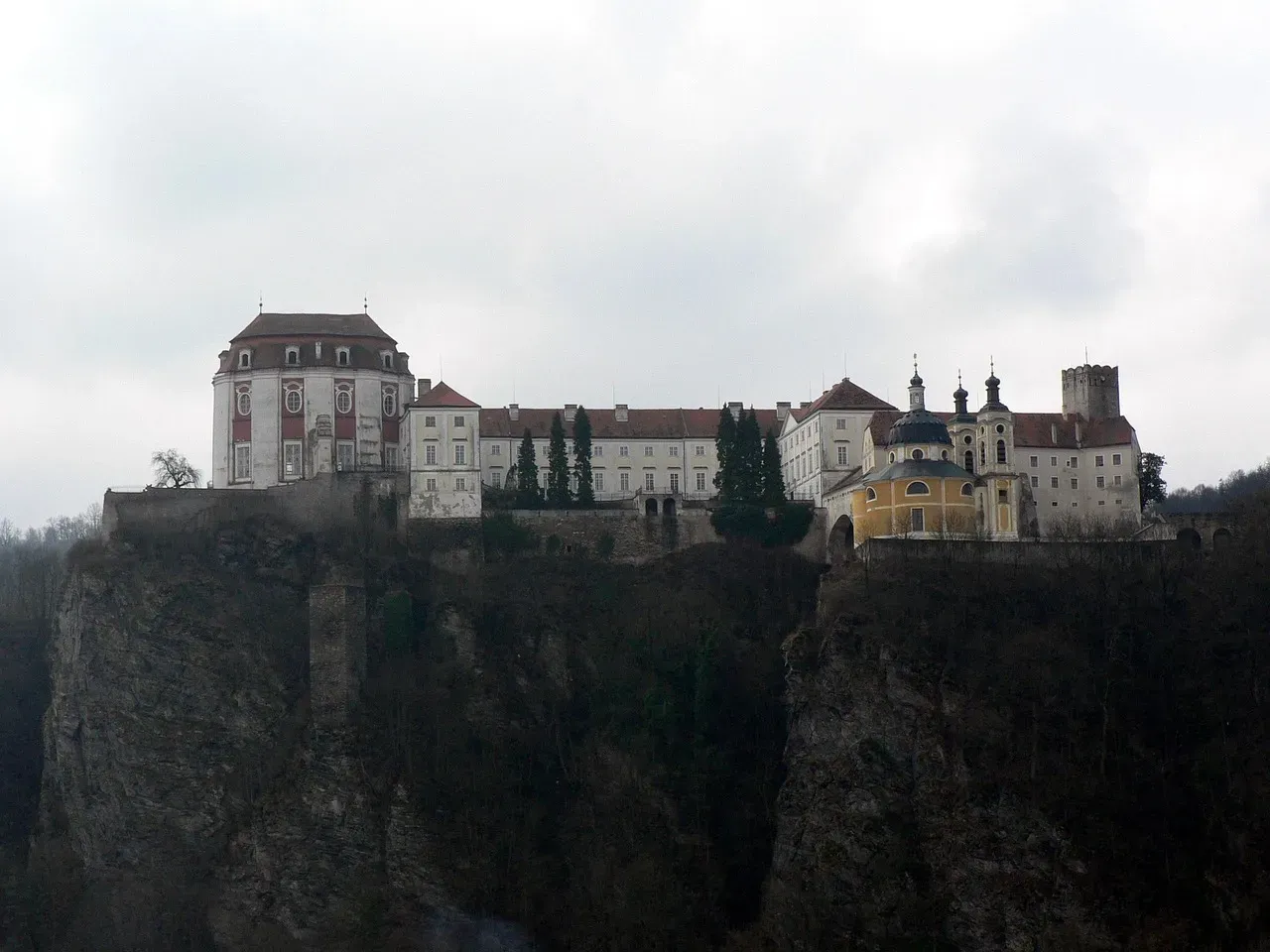
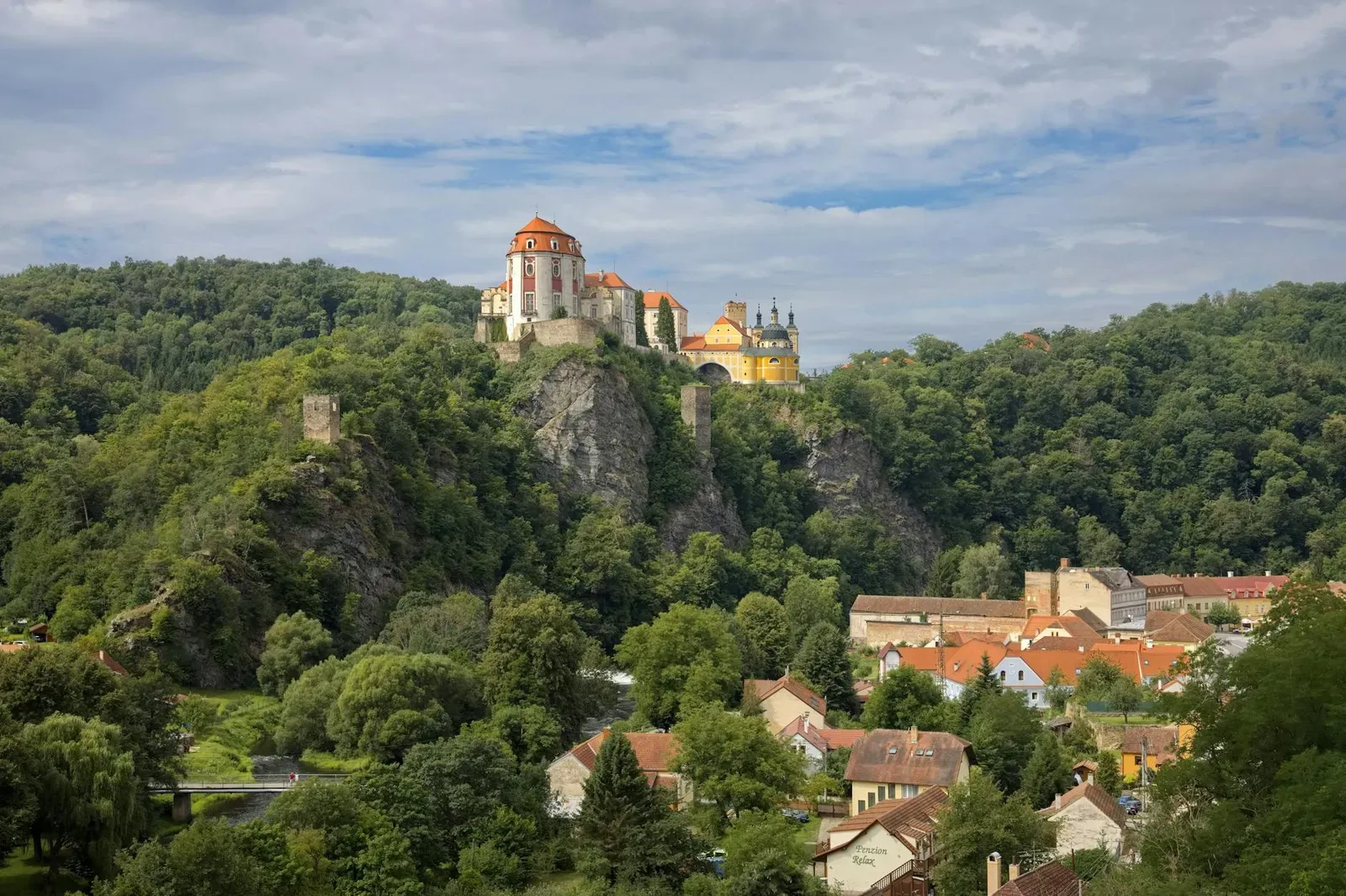
Below the road from Znojmo, the river Dyje makes a sharp, hairpin turn around a massive thumb of rock. On top sits a castle dropped there by a giant with a specific interest in 17th-century drama. This is Vranov nad Dyjí, and it requires a deliberate mission to reach.
The Theatre of Ancestors
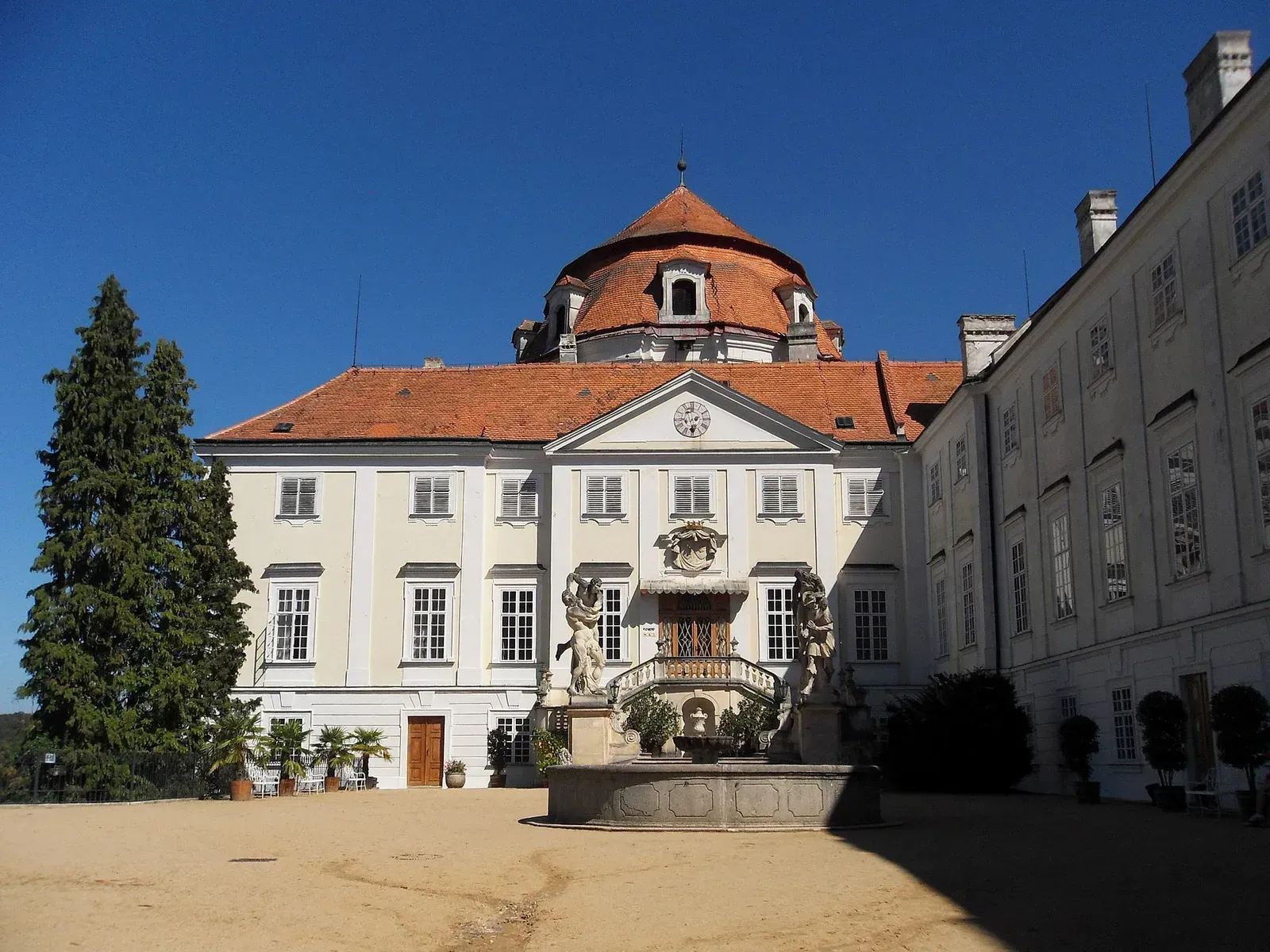
The climb to the gates is a steep, winding path that makes your boots slip on the grit of weathered sandstone. Inside, the mission narrows down to a single oval structure jutting over the precipice. This is the work of Johann Bernhard Fischer von Erlach, the man who defined the look of the Austrian Empire in stone. He built Schönbrunn in Vienna, but here, the Althann family gave him permission to be as theatrical as possible.
I stood in the center of the Hall of Ancestors, listening to the rhythmic pulse of the wind hitting the glass. The ceiling is a riot of paint where heroes and gods look down with supreme confidence. My guide, Petr, a man with hands like calloused oak from years of chopping wood for the castle's massive stoves, didn't talk about beauty. He pointed at the white marble statues. He noticed the specific way the light hits the shadow on a stone boot at 3:00 PM. The room echoes; a whisper travels across the oval like a secret through a keyhole.
The Border of Silence
If you turn your back on the Baroque gold and look south, the mission changes. You are looking into Podyjí National Park, the smallest and most rugged in the country. For forty years, this was the "no-go" zone of the Iron Curtain. The river valley was a wasteland of barbed wire and watchtowers, closed to the public and left to the lizards.
I walked down towards the water, the air turning five degrees cooler the moment I hit the tree line. The trail leads to Clary's Cross, an iron marker on a rocky outcrop. From here, the castle's white towers stand out against the dark, heavy green of the pines. There are no tour buses here, only the sound of the Dyje rushing over stones eighty meters below. Near the village of Čížov, a section of the original electric fence still stands, a jarring concrete reminder that this paradise was once a prison.
The 1930s Meets the Moravian Adriatic
Upstream, the river hits a massive concrete wall. The Vranov Dam, built in the 1930s, created a reservoir stretching thirty kilometers. Locals call it the "Moravian Adriatic." It is a world of small wooden cottages and the low hum of electric boats. The transition from 17th-century aristocratic pride to 20th-century engineering is immediate and physical.
I spent an hour on the white suspension bridge near the beach. It's a slender structure, tight as a harp string over the murky green water. A woman in a sun hat was selling smoked trout from a wooden shack near the dam. Her grandfather helped clear the trees before the valley flooded in the thirties. The fish she handed me, wrapped in greaseproof paper, was salty and warm. It tasted of woodfire and the deep river mud.
Architecture of the Underground
The village of Vranov nad Dyjí is squeezed into the narrow gap between rock and water. Houses are built into the slopes, with cellars carved directly into the cold gneiss. Because this is the edge of the Znojmo wine region, these stone holes are the real social hubs. The temperature stays a constant 12 degrees Celsius, a sharp relief from the July sun.
I ended the day behind a heavy oak door with a small chalkboard that simply said "Ryzlink." The winemaker had fingers stained by the harvest. He poured a glass of Ryzlink rýnský (Riesling) that was bone-dry and acidic. He didn't offer a lecture on notes of peach or citrus. He just said the grapes grew two kilometers away and told me to drink it while it was cold. This is the reality of Vranov. It is a place of extreme heights and deep cellars, watching the river turn while the empires come and go.
Jan's Pro-Tip: The Golden Hour Strategy
Most visitors park in the main lot, walk through the castle, and leave. To see what the Althann family actually intended, park in the village near the river and take the forest path toward Felicitina studánka (Felicity's Spring). It's a steep climb through the original 18th-century landscaping, passing hidden stone bridges and grottos. Time your arrival at the Hall of Ancestors for the final tour of the afternoon. When the sun drops, it hits the frescoes at an angle that makes the gold leaf actually glow. It's the only way to understand the theatrical ego of the men who built this rock.