The first thing you register in Krásný Dvůr is the quiet. It’s not the sterile silence of a museum, but the deep, sun-warmed stillness of old stone and ancient trees. Arriving here mid-morning, after a smooth local bus ride from Bílina, the air immediately feels cleaner, carrying the scent of damp earth and the distant promise of hay. It's on these local journeys that the simple courtesies, like offering a seat to someone with a heavy bag, remind you of the rhythm of Czech life.
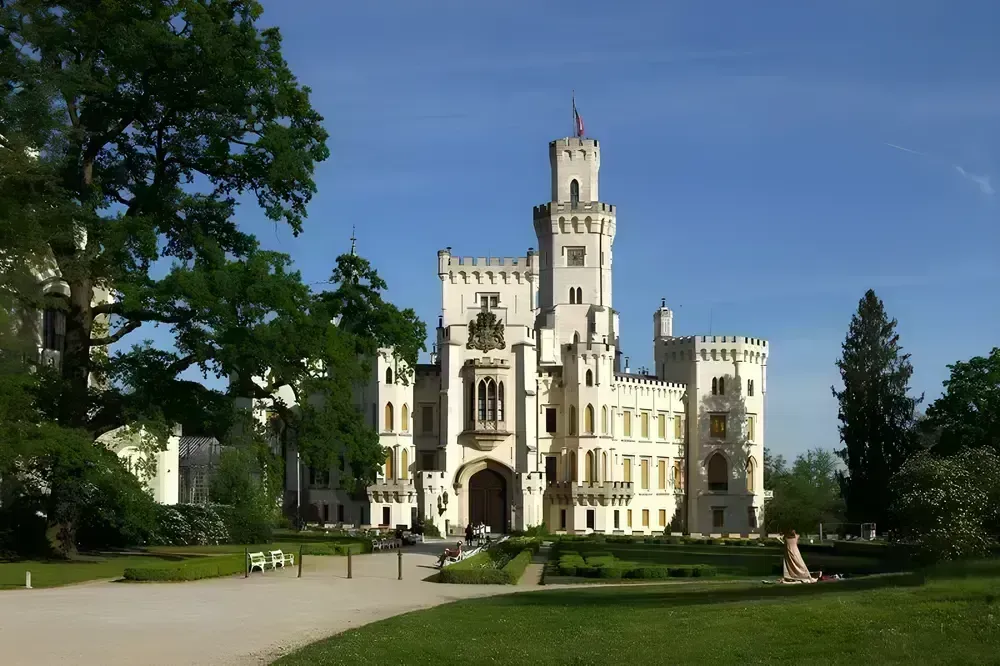
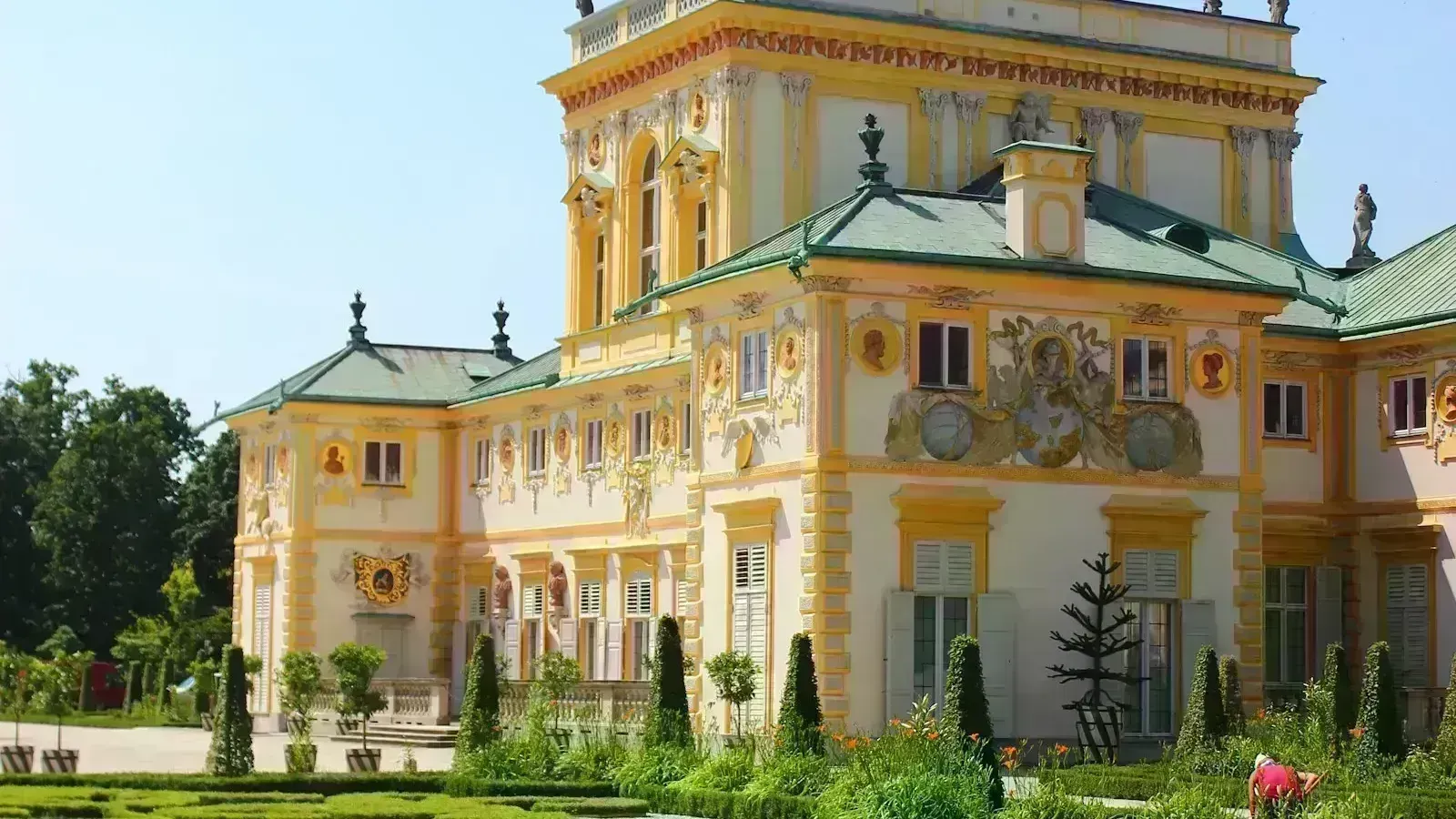
The chateau itself, Zámek Krásný Dvůr, dominates the view, a grand, imposing sight. Its structure immediately hints at centuries of history, but the sheer scale of the Baroque remodeling is what truly captures my attention. Standing back on the gravel path, tracing the line of the *axial triple-wing layout* that defines the main structure, it's not hard to picture the wealthy Czernin family arriving here in the early 18th century, eager to transform the old site into a proper hunting lodge. In fact, it was František Josef Czernin who commissioned František Maximilian Kaňka to overhaul the place between 1720 and 1724, replacing the earlier Renaissance villa structure entirely. It wasn’t just a home; it was a statement.
While one could spend hours wandering the chateau’s stately halls, the real mission lies outside. My CZECHtrekker briefing emphasized that Krásný Dvůr is famous for its park, not just its palace. It's a place to understand the landscape—where conservation meets community. Adjusting my pack and pulling out a map, I headed straight for the thick boundary of trees, eager to immerse myself in the wilds of Bohemia’s first great English garden.
Into the Wilds of Bohemia’s First English Park
The Krásný Dvůr English landscape park is enormous, nearly one hundred hectares, and you feel every single one of them as you walk. It’s a remarkable cultural landscape, considered one of the most valuable in the Czech Republic, but the sheer size means you quickly leave the manicured lawns behind and enter a realm of winding paths and thick, shaded groves. The landscape feels deliberately designed to surprise you, to reveal itself in stages.
After only twenty minutes of walking, following a path that skirts the edge of a deep reservoir, the unmistakable sound of rushing water fills the air. It seems impossible; you are miles from any major stream. Pushing through a curtain of low-hanging branches, you stumble upon a small stone structure nestled in a clearing: Pan’s Temple.
This Neo-Classical structure is one of the many *follies* scattered throughout the park—architectural elements placed purely for aesthetic pleasure and reflection. But the real spectacle is the water feature: a surprisingly powerful *artificial waterfall* cascaded down a short drop, filling the air with cool mist. It is a completely romantic scene, an example of the design influences that shaped the early landscape gardens here. The designers weren't just planting trees; they were creating living art, integrating designed elements with the existing natural terrain to enhance the area's aesthetic appeal while still respecting the natural contours of the land.
It’s easy to look at a site this old and assume it’s untouched, preserved in amber. But walking here, you realize the park is constantly changing, even if it is currently in poor condition and undergoing extensive restoration efforts. Pausing near the waterfall, you appreciate the diverse botanical elements. The park’s ecological value is immense, hosting numerous species of plants and trees. Seeing the care taken here, even in sections that are visibly overgrown, makes you realize that Krásný Dvůr’s value isn't just historical; it’s an active commitment to environmental stewardship.
Continuing the walk, searching for a specific historical marker—a Gothic revival structure dedicated to a famous military victory—the journey proves to be a perfect metaphor for exploration: half physical trek, half historical detective work.
The Crossroads of History and Remembrance
The search for the Neo-Gothic lookout tower takes you deeper into the park's older sections. Tracing a path that eventually leads past Goethe’s Oak—a majestic, ancient specimen that stands as another silent testament to the cultural significance of this land—is a highlight.
Eventually, through a thinning of the foliage, you see it: the dark stone outline of the tower, rising dramatically against the green canopy. It has a distinctly medieval feel, though its construction was much later, part of the 18th and 19th-century fascination with historical revivalism.
Approaching it, you recall the fascinating detail about the structure’s purpose. While it was initially erected as a simple *lookout tower*—a place for the nobles to survey their vast estate and the surrounding countryside—it later gained a profound commemorative role. It was dedicated to celebrate the victory over Napoleon at the Battle of Leipzig in 1813, featuring a statue of Field Marshal Charles Philip Schwarzenberg. Standing there, looking up at the stone structure, you realize the Czernin family, who held the estate until the end of World War II, were more than just landowners; they were pivotal figures in noble diplomacy, their estate reflecting major European political and military events. The whole landscape park, in fact, served as a showcase for noble prestige and culture.
The physical presence of the Neo-Gothic temple feels incredibly distant from the Baroque chateau where the journey started. This estate really is a condensed timeline of Czech history and architectural tastes.
You might even encounter a local volunteer maintaining the older pathways near the follies. They can explain that the restoration isn’t just about fixing the stone. It’s part of a broader commitment to *cultural heritage and educational initiatives*. Once completed, the temple will host exhibitions on the history of landscape parks and smaller garden architecture, and serve as a venue for tours, concerts, and social events. It’s clear that Krásný Dvůr is actively working to ensure the site’s historical and artistic heritage doesn’t just sit dormant but serves as an engaging resource for the community and visitors alike.
A Taste of Local Life: Bartering Hay and Helping Hands
A conversation with a local can naturally shift from the grand history of nobles and architecture to the practical, down-to-earth realities of living in Krásný Dvůr today.
"We are a small place," one might say, gesturing to the fields where the smell of freshly cut grass is thick. "We have to rely on each other."
The local economy is fiercely rooted in *sustainable practices and community cooperation*. It's fascinating to learn about their circular economy model, which relies heavily on agriculture. The hay from the fields is used for livestock—chickens, pigs, cows, and rabbits.
This isn’t industrial farming; this is hyper-local sustainability. Even the food scraps that aren’t consumed by the animals are carefully composted. There is virtually zero waste. It perfectly illustrates how integral agriculture remains to the community, sustaining local needs while adhering to traditional practices.
Local businesses cooperate closely. The local shop owner knows the pub hours; they never clash. And the services? They are often volunteer-run.
A heartwarming detail is that *local residents take responsibility for snow clearance in the winter*, and the *village fire engine is manned by a volunteer force*. This interdependence is deeply authentic. It’s a culture where the common good isn't an abstract concept, but a set of voluntary duties shared by everyone. Small businesses, like the local car repair garage and electrical workshop, collaborate closely to ensure mutual support, minimizing conflict and fostering unity. This isn't just a place with a chateau; it's a functioning, close-knit ecosystem where family values and community ties are paramount.
From Hussite Commander to Heritage Conservation
Later in the day, returning to the chateau, the structure, now seen through the lens of local stories, feels less like a monument to distant nobility and more like a symbol of enduring legacy.
It's worth reflecting on just how long this place has been a focal point. It was first recorded as a *medieval fortress way back in 1295*. That's over seven centuries of continuous historical relevance. It even gained prominence during the religious wars of the 15th century when the renowned Hussite commander, *Diviš Bořek*, seized the estate. It gives you a profound sense of the cyclical nature of power and change here—from medieval fort to Hussite stronghold, to Renaissance villa, to Baroque hunting lodge, and now, to a center for cultural appreciation.
The current focus on heritage conservation, especially through educational outreach, feels like a modern and necessary chapter. The chateau staff, in collaboration with local initiatives, run programs designed specifically to engage children and young adults, particularly those from *social care institutions*. These tailored activities, led by trained castle employees, teach them about the importance of cultural monument preservation and landscape parks. A trip organized for children residing at the Mašťov castle is a concrete example of how Krásný Dvůr is leveraging its history not just for tourism, but as a vital educational tool for vulnerable populations. This commitment to inclusivity, which also extends to efforts for *barrier-free travel* in the wider region, shows a deep sense of social responsibility alongside historical preservation.
It’s an impressive balancing act: respecting the architectural grandeur of the past while actively contributing to the overall revival of the area today.
Finding the Quiet Center
As the afternoon sun begins to dip, painting the cour d’honneur in gold, walking back through the village center toward the bus stop reveals a pace noticeably slower than in urban centers like Prague. While Prague buzzes with millions and attracts significant tourist traffic to places like the Armádní muzeum Žižkov, Krásný Dvůr maintains a tranquil lifestyle, supported by its approximately 1,200 residents.
This small population helps maintain the village's cultural and social fabric, which is profoundly rooted in *family values*. Czech culture often prioritizes familial relationships over demanding work commitments. It’s common for mothers to take extended *maternity leave until their children reach three years of age*, emphasizing a nurturing environment in the early years. Observing the quiet interactions in the local shop, you see that sense of deep, generational belonging in action.
Getting here is surprisingly straightforward, proving that 'off-the-beaten-path' doesn't mean 'inaccessible.' A train to Bílina, followed by a short bus ride (about 30 CZK), drops you off right near the chateau—look for the sign for 'Zámek Krásný Dvůr.' If you're coming from towns like Teplice or Litvínov, the direct buses run hourly and are equally convenient (around 40 CZK). The Czech Tourist Authority is actively encouraging train travel and supporting less-visited areas like this, which only enhances the experience.
A day in Krásný Dvůr is far more than a chateau visit. It’s a complete immersion into a community that lives by a visible code of cooperation and sustainability, surrounded by a stunning, historic landscape that holds the title of the first English park in Bohemia. It’s a place that teaches you about noble history, yes, but also about the quiet, powerful strength of local unity.
If you are seeking a place where history and community resilience meet, where the architecture tells a story of centuries and the local economy tells a story of cooperation and shared stewardship, Krásný Dvůr is waiting. When you visit, remember the spirit of this village. Seek out the local shop, use the public transport, and explore the park responsibly. Let's support these small communities in their efforts to balance heritage conservation with sustainable tourism practices, ensuring that the legacy of Krásný Dvůr continues to thrive.