
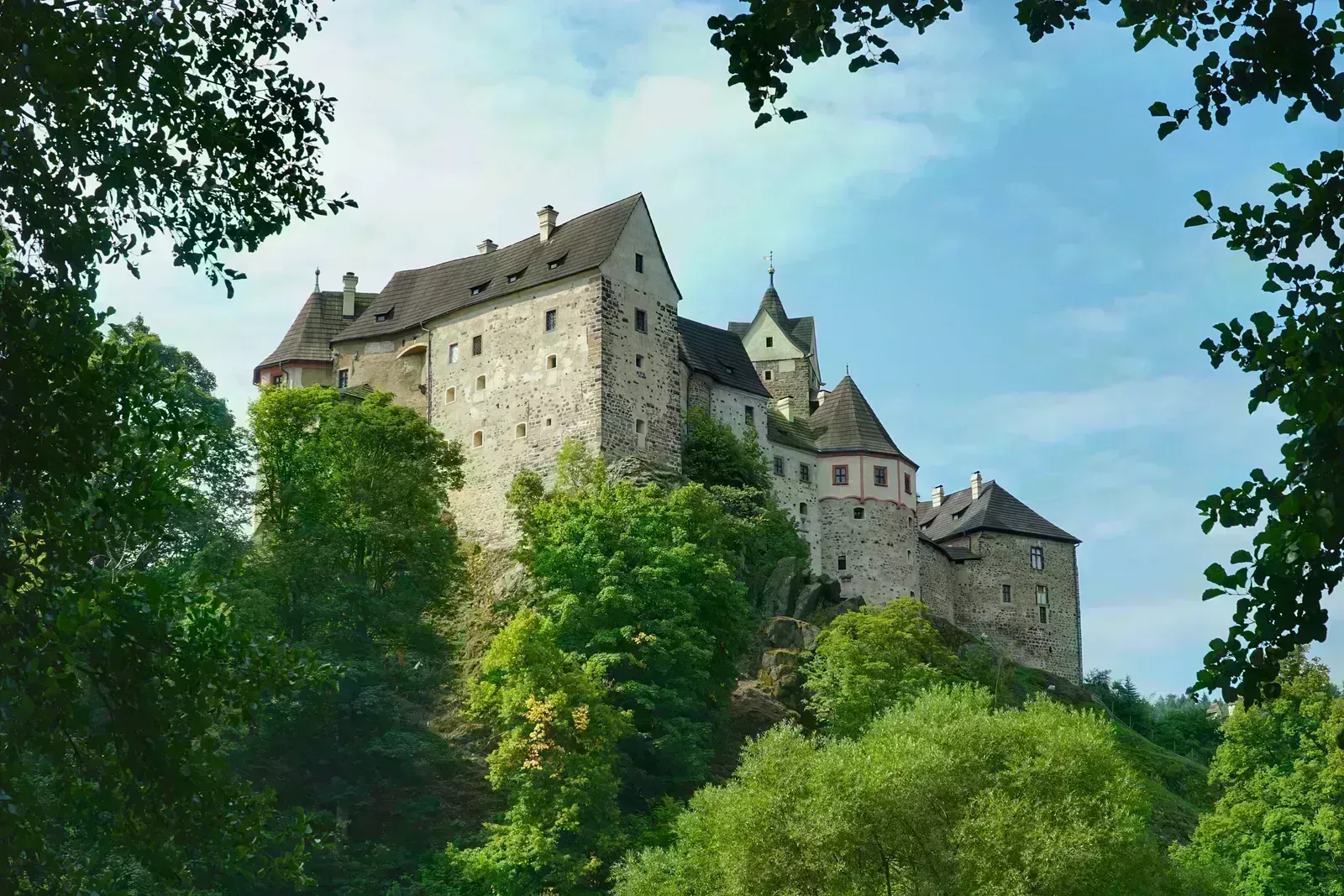
If you've been walking for two hours from Karlovy Vary, following the blue trail as it hugs the Ohře River, your feet are probably starting to complain. But then you round the final bend, and Loket Castle appears. It sits there on a massive granite rock, looking exactly like a medieval fortress should: stubborn, grey, and completely indifferent to how tired you are.
The name "Loket" means "elbow" in Czech, named after the sharp, U-shaped bend the river makes around the town. In the 12th century, this was the ultimate defensive play. The river acted like a natural moat on three sides, and the sheer cliffs on the fourth made it what people called the "Impregnable Castle of Bohemia" or the "Key to the Kingdom." Taking the hike instead of the bus from Karlovy Vary gives you a real sense of that strategy. You feel the isolation and the strength of the spot in a way you just can't from a car window.
Stone That Doesn't Budge
The Ohře Valley is a great stretch of trail, mostly shaded by old trees and dotted with mossy stones. It's part of the national cycling route 204, so you'll share the path with a few bikers, but mostly it's just you and the river. It's a solid 9.5-kilometer trek, and by the time you reach the town, you're ready for a strong Czech coffee and a place to sit.
Once you're inside the castle, the first thing you should do is find one of the original 12th-century walls. The stone is rough and cold, built long before anyone was worried about "aesthetics." But as you move into the courtyard, you see the shift. Gothic arches and ribbed vaults were added later, turning a basic military outpost into a proper royal residence. It's a scrapbook of architectural styles, showing how every generation of owners tried to update the place without losing its core strength. There was even a massive fire on March 15, 1725, that wiped out most of the upper floors, but those medieval foundations didn't budge. For a while after the fire, the once-grand castle was actually used as a humble granary.
The View from the Tower and the Schlick Legacy
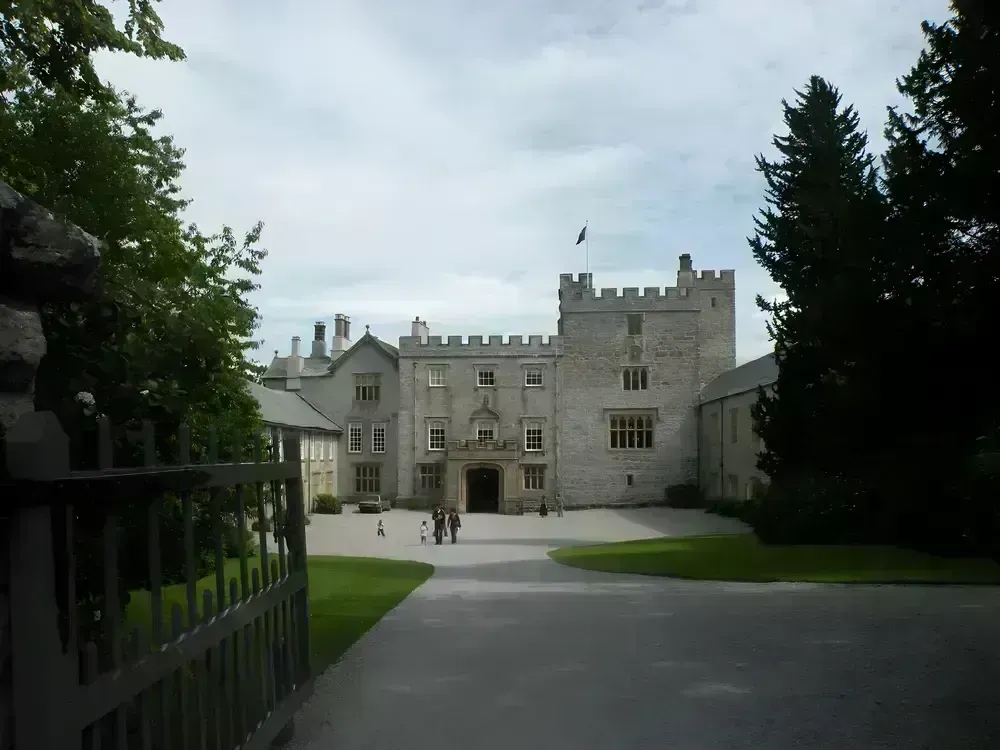
If you have any energy left, climb the round tower. The steps are steep and narrow, but the view from the top is the best in the region. You can see the river snaking through the green hills and the red-roofed town huddled at the castle's feet. Back in the 15th century, the castle was granted to the **House of Schlick** (Slik). They were powerful but notoriously cruel rulers who were constantly at odds with the townspeople. Their reign ended in 1547 when the Emperor confiscated the castle after they joined a failed revolt. Looking down, you can almost see the history of Bohemian power plays out in the valley below.
But the mood changes as you head into the lower levels. Loket has a dark side that's hard to ignore. From 1788 all the way until 1948, the castle was used as a state prison. That's 160 years of being a place of confinement rather than a royal seat. The dungeons and torture chambers are still there, and walking through them is a heavy, sobering experience. It's a reminder that these grand stone walls weren't always about knights and festivals.
Goethe, Porcelain, and St. Florian
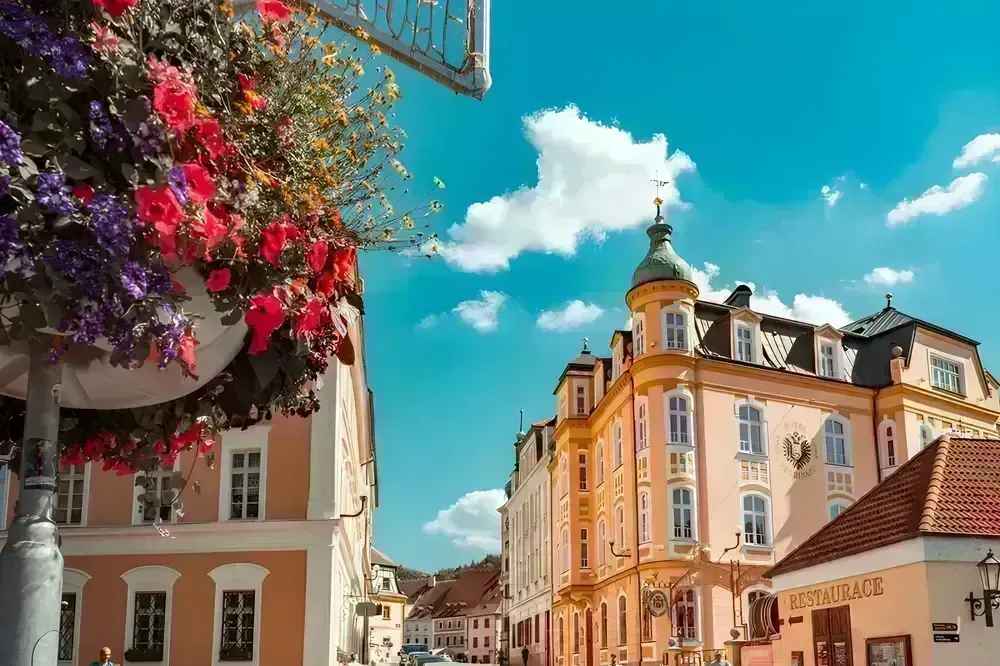
One of Loket's biggest fans was **Johann Wolfgang von Goethe**. He visited 15 times! He even celebrated his 74th birthday here at the Hotel Bílý kůň (White Horse) on the square. It was during that final visit that he supposedly proposed to a 19-year-old girl named Ulrika. She said no, which inspired his famous "Marienbad Elegy." Goethe described Loket as "a work of art that can be viewed from all sides," and he wasn't wrong.
To lighten things up, check out the porcelain museum inside the castle. This region was a global powerhouse for porcelain in the 19th century, and the museum houses pieces from the Haidinger brothers' original factory. You'll also see symbols of **St. Florian** everywhere. He's the patron saint of firefighters and brewers—two of Loket's most important professions. Legend says he saved an entire city with a single bucket of water, a story the locals hold dear given the town's history of fires.

Jan's Pro-Tip: Soup and Coffee
Today, Loket is anything but a dead monument. The courtyard is constantly being prepped for something—whether it's a wine festival or the legendary **Onion and Garlic Festival**, where local chefs compete for the best soup. If you're on the square and need a break, head to **Pension Atmosféra** for a homemade cake or **Hotel Goethe** for a coffee in a truly historic setting. They take cards, but keep a few coins for the small artisan shops in the side streets.
Walking back across the bridge at the end of the day, you realize that Loket is a survivor. It's been a royal palace, a grim prison, and now a cultural heart for the Ohře valley. If you go, **start early from Karlovy Vary**. The hike is beautiful, but the June sun is no joke. Wear good shoes, bring plenty of water, and give yourself a full afternoon to explore. Loket doesn't do "fast-paced"—it asks you to slow down, climb the tower, and maybe have a beer at the St. Florian Brewery while you look up at those thousand-year-old walls. It's a piece of history that you have to earn, and that makes it all the better.