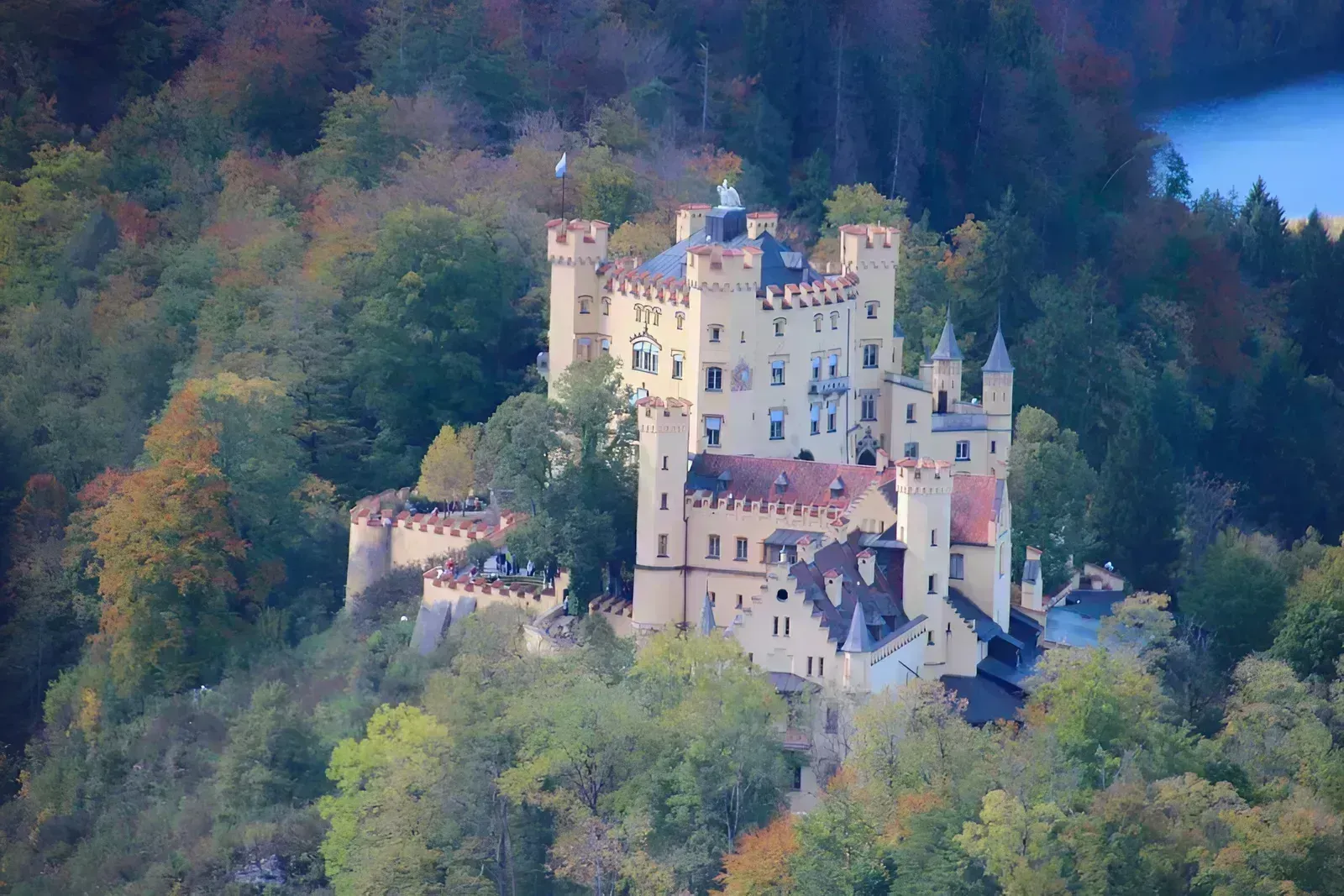
The fairytale-like Rožmberk Castle viewed from across the Vltava River.

by JanFebruary 26, 2024

The View from the Top: Finding Serenity and Centuries on the Slopes of Rožmberk Castle

The morning air in South Bohemia always smells crisper than I expect. It was still early, the kind of quiet time that feels exclusive to those who wake before the main bustle, and I was already breathing hard. The village of Rožmberk nad Vltavou was waking up beneath me, visible only as soft curls of chimney smoke against the moss-green roofs.

I was climbing the short path—barely 400 meters, though it felt more vertical—from the main square up to the castle gates. The gravel crunched underfoot, a satisfying sound that reminded me I was trading the modern world for something profoundly older.

When I finally reached the summit, the scene that unfolded was exactly why CZECHtrekker focuses on getting up close and personal with history, rather than just driving past it. Perched dramatically above the winding Vltava River, the castle stood silent, its multi-layered façade catching the soft, golden light. This spot, established way back in the 13th century by the Witigonen family, or the Lords of Rosenberg, was clearly chosen for its strategic, commanding vantage point.

[[image-left:rozmberk_castle_view]]

Standing there, watching the river curve below, I felt the deep, foundational history of the place. But the castle itself told a more complex story than just one dynasty. It was built upon Romanesque roots, but what I was looking at now was a rich tapestry of styles—Gothic windows, Renaissance detailing, and later Baroque flourishes, all blended together. It was a fascinating architectural study, showing how the castle adapted and changed hands over centuries of life in this turbulent region.

Layers of Legacy: The Castle’s Architectural Confession

I had booked one of the first guided tours of the day, hoping to catch the interior before the crowds arrived. I knew from my research that the castle attracts around 11,200 visitors annually, making those tranquil morning hours a precious commodity.

I joined a small group, armed with my English information booklet—essential, since the tours are primarily conducted in Czech. As we stepped into the richly decorated entrance hall, the blend of architectural epochs immediately became apparent. Though the Gothic elements are truly dominant, reflecting the significant cultural and economic growth of the region in the 13th century, there was refinement everywhere. I noticed sophisticated fresco and stucco decorations, clearly inspired by Italian Renaissance themes, offering a hint of the grand tastes of the noble families who called this place home.

The tour was fascinating, moving quickly through grand rooms filled with preserved collections and original furnishings. But there was a small frustration, too. The standard guided tour clocks in at around 45 minutes, and I understood why some visitors feel this duration can feel rushed. There is so much history packed into these walls, and sometimes I felt like I was being tugged away from a particularly evocative piece of art or an old armorial crest just as I was starting to absorb it.

One room, in particular, drew my eye: the Crusade Gallery. It was established by the Buquoy family, who took ownership around 1620 during the Thirty Years’ War. This family, known for their passion for art and preservation, were the ones who really cemented the castle’s later, Romantic aesthetic. They weren’t just preserving a residence; they were transforming it into a family museum to celebrate their legacy. Seeing the gallery, filled with portraits of historical figures, made me realize that the castle's current appearance is largely a result of these extensive 19th-century reconstructions.

I lingered near a pointed window framed in refined white stone, trying to soak up the atmosphere, even as our guide moved us along. The Rožmberk Castle provides a critical insight into the lives of the medieval nobility, and I was eager to connect with that history tangibly. The English booklet proved invaluable for filling in the context that the speedy tour didn't allow time for, specifically detailing how the influential Rožmberk family had expanded their presence across South Bohemia, even constructing the nearby Český Krumlov Castle.

Escaping the Rush: Finding Perspective on the Vltava

Stepping back outside after the 45-minute sprint through centuries of noble life, I needed to recalibrate. The structured tour gave me the facts and the visuals, but I wanted the feeling—the genuine, personal connection that only comes from slowing down.

I found a quiet bench near the decorative battlements, which are typical of the Gothic architecture that defines the building's imposing structure. From this spot, the views were simply commanding. Rožmberk Castle is perfectly situated atop its hill, not just offering a scenic vantage point of the Vltava River, but also revealing a panoramic sweep of the surrounding landscape. On a clear day like this, I could clearly make out the dark, forested ridges of the Šumava Mountains stretching away to the west, and even, shimmering faintly on the horizon, the famed Austrian Alps.

This moment of quiet contemplation made me realize how the castle's design reflects a broader trend, especially those later Baroque additions, where structures were often intentionally integrated into their natural settings. It wasn’t just a fortress; it was a frame for the landscape.

[[image-right:rozmberk_vltava_river]]

I spent time just watching the river activity below—a peaceful contrast to the turmoil of the Thirty Years' War and the socio-political dynamics of the Rožmberk dynasty that once defined life here.

I decided that the best way to truly appreciate this emblem of Czech history was not to rush, but to walk the land it surveyed. The village below, Rožmberk nad Vltavou, is charming and well-preserved, offering plenty of opportunity to appreciate the local culture, but my goal was to find a deeper, more meditative connection with the castle itself.

The Pilgrim’s Circuit: A Deeper Trek into South Bohemia

The context document I had studied before coming mentioned a specific hiking opportunity—a way to see the castle from angles that most visitors miss. Just beyond the main parking area (conveniently located back in the town square after a quick descent from the castle), there is access to a circular hiking route.

This route, just over six kilometers long, promised to provide different perspectives of the castle and the valleys. This felt like the perfect antidote to the "rushed tour" feeling.

I set off, following the well-marked path that quickly led me away from the village noise and into the dense South Bohemian woods. The path was challenging in parts, skirting ridges and dropping into small hollows, but the air was clean and the quiet was profound. Every once in a while, a break in the trees would afford a stunning, distant view of Rožmberk, now appearing less like a museum piece and more like the strategic, 13th-century fortification it started as.

What truly elevates this particular hike is the presence of an 18th-century pilgrimage trail known locally as the Křížová cesta. Following this trail felt like stepping back into a different layer of regional history, one focused not on noble power, but on faith and local tradition. The trail markers were subtle, integrated into the landscape, adding a layer of spiritual depth to my physical trek.

This circular route perfectly mirrored the idea of the castle’s evolution. Just as the building itself started with Romanesque foundations before accumulating Gothic towers, Renaissance interiors, and 19th-century Romantic enhancements, the area around it layers historical uses—from strategic defense to religious pilgrimage to modern recreation.

I remember stopping at a high point on the Křížová cesta, looking back across the valley towards Rožmberk. The white stone of the castle façade shone brightly through the greenery. It was a beautiful illustration of how the castle and its surrounding gardens and parks were designed to complement each other—a true reflection of that Baroque trend of integrating architecture into nature. I felt a sense of connection with the Buquoy family’s vision; they weren't just preserving walls, they were preserving a view and a feeling.

Connecting the Past to the Present

My time exploring Rožmberk was a lesson in pace. While the quick guided tour is necessary for efficient viewing (and essential, as independent exploration of the main historical rooms is generally restricted), the real magic lies in using the surrounding environment to deepen that initial understanding.

After completing the six-kilometer circuit, I returned to the castle grounds, feeling refreshed and knowledgeable. It was later in the afternoon now, and I decided to take advantage of the amenities. Stopping at the shop on the grounds, I grabbed a coffee and an ice cream. It was reassuring to see that they accept card payments for both tickets and refreshments, which always makes things easier for international visitors, though my travel style is definitely cash-heavy.

I sat there, sipping my coffee and looking up at the structure—an architectural marvel that started with the Lords of Krumlov and the Lords of Rosenberg, withstood the turmoil of the Thirty Years’ War, and was ultimately reborn by the Buquoy family in the Romantic Gothic style.

Rožmberk Castle is a vital emblem of Czech history and culture. Its continued preservation highlights its role as a catalyst for sustainable economic development in South Bohemia. It’s a place that asks you to look closer, to read the English booklet, and perhaps most importantly, to put on your hiking boots and step outside the stone walls to appreciate the full scope of its influence.

For anyone traveling through South Bohemia, perhaps after visiting the nearby UNESCO site of Český Krumlov (only 20 kilometers north), making the journey south on road 160 is a non-negotiable step. Whether you’re interested in the military history, the intricate Renaissance art, or just breathtaking views of the Šumava Mountains, Rožmberk delivers.

My final reflection is this: when we visit places of such rich heritage, we owe it to the past—and to the 11,200 visitors who appreciate this site annually—to move thoughtfully. Take the tour, absorb the facts, but then spend the extra time walking the trails, observing the views, and truly understanding the physical space the castle commands. That’s how you move beyond being a mere tourist and become a genuine trekker of Czech history.

If you plan to visit this incredible site, remember to contact the castle directly regarding accessibility if you or someone in your group faces mobility issues, as the historic nature often means challenging stairs and uneven surfaces. Most importantly, travel slowly, respect the preserved interiors, and support the local communities that keep this fascinating legacy alive.

    We use cookies to enhance your experience. By continuing to visit this site you agree to our use of cookies. Learn more.