
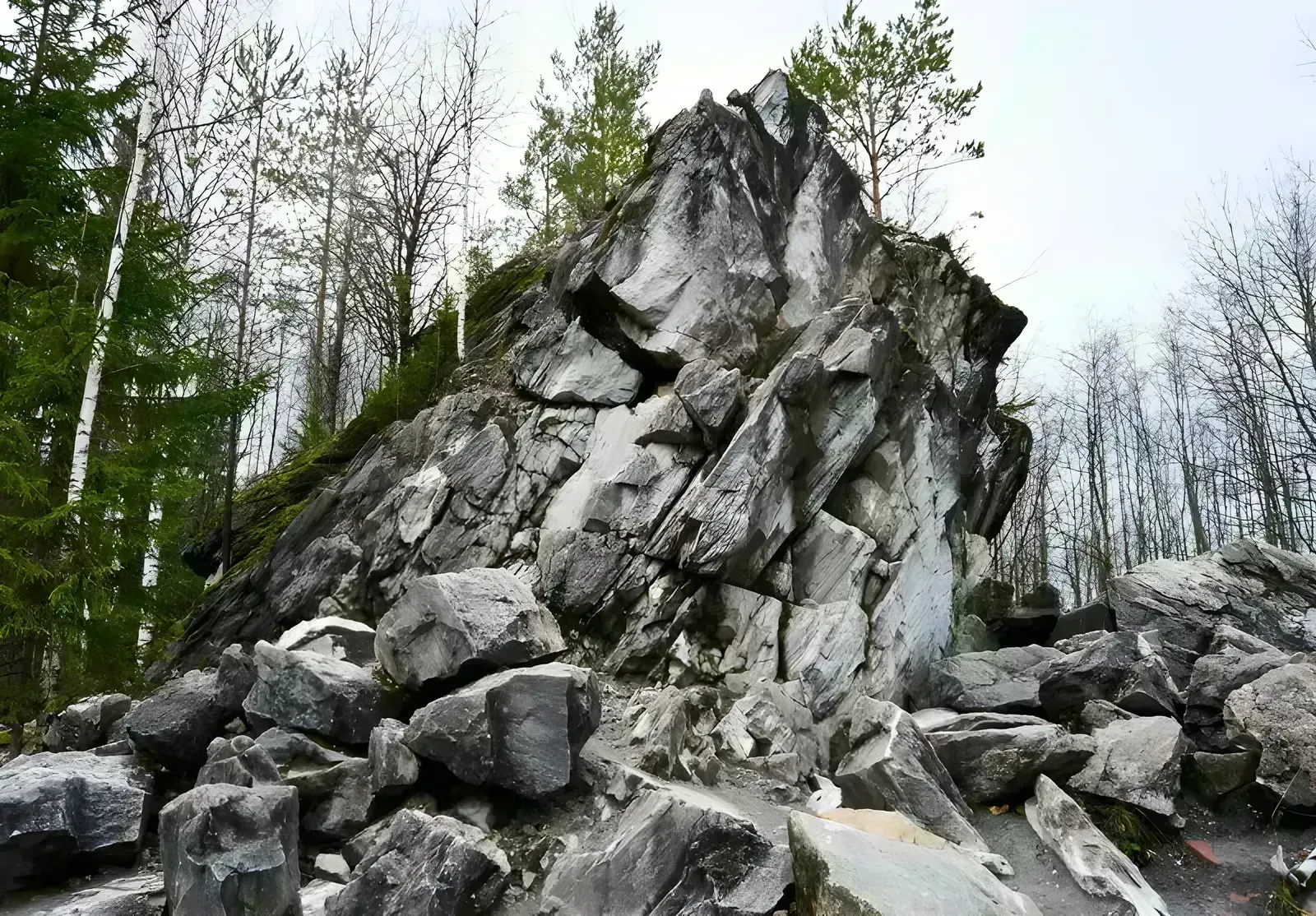
Deep inside the Adršpach rock city, the world feels like it's closing in. You're walking through narrow lanes where the sky is just a thin blue line between massive sandstone walls. In some spots, it's so tight your shoulders brush against the cold, gritty rock on both sides. This isn't a hiking trail in the normal sense—it's more like a hallway built by an ancient sea and millions of years of rain.
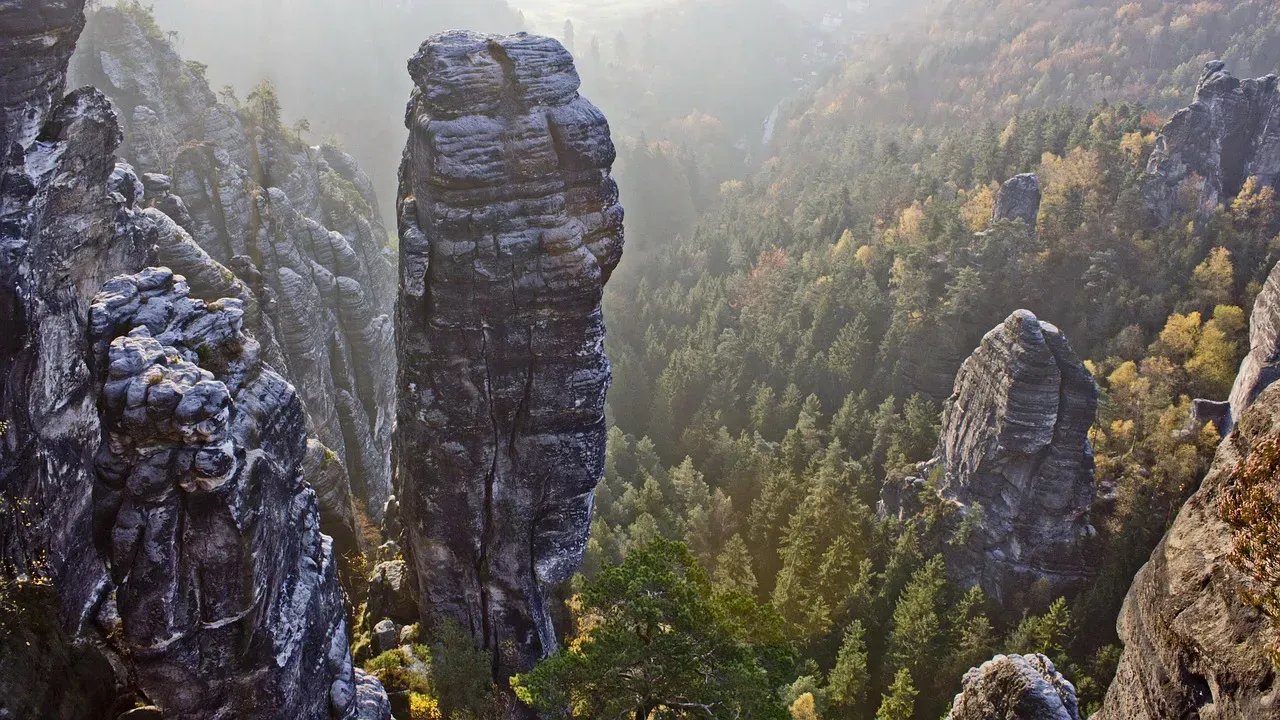
I got here early, right when the gates opened at 8:00 AM, and the silence was heavy. It's the kind of quiet that makes every footstep sound like a drumbeat. Local legends say these towers were once a real city, turned to stone by the gods because the people living there were hiding outlaws. Standing at the base of "The Lovers" (Milenci)—the tallest tower at a staggering 81.4 meters—you can see why someone would come up with that story. It really does feel like a petrified metropolis.
These formations are actually the remnants of a shallow sea bed from the Upper Cretaceous period—about 90 million years ago. You can still find marine fossils if you look closely at the layers. Over time, water worked its way into the cracks, slowly eroding the sand and leaving behind these vertical blocks. It's nature's own architecture, carved out grain by grain.
The Fire of 1824 and the "Great" Waterfall
What's crazy is that for most of history, people didn't even know the full scale of this place. It was too overgrown and dangerous to explore. Everything changed in 1824 when a massive forest fire ripped through the valley. The fire burned for weeks, clearing out the thick brush and revealing the canyons and towers we see today. Suddenly, Adršpach became a major destination for European royalty and prominent figures. You can still find old inscriptions carved into the rock by 18th-century German travelers, and even a 1968 protest against the Soviet-led invasion.
Deeper in the circuit, you'll hit the **Great Waterfall** (Velký vodopád). It's 16 meters high, but there's a catch: it usually only trickles. To see it in full force, you have to participate in a local tradition. The flow is regulated by a dam on the lake above, and the boatmen traditionally shout a secret command to the mountain spirit, Krakonoš: *"Krakonoši, dej nám vodu!"* (Krakonoš, give us water!). If they shout loud enough, the sluice gate is released, and a proper surge of water crashes down the cliff.
The Sugar Loaf and the Mouse Hole
One of my favorite spots is the **Sugar Loaf** (Cukrová homole). It's a massive, upside-down cone of rock that's 13 meters wide at the top but rests on a base only 3 meters wide. There's a long-standing tradition here where visitors prop up the base with small sticks, a "superstition" to keep it from falling over. It's a little ridiculous, but you'll find yourself doing it too—just in case.
But the real test of your hiking boots comes at the **Mouse Hole** (Myší díra). It's a passage through the rocks that is only 50 centimeters wide. If you're wearing a big backpack, you're going to have to take it off and squeeze through. It leads you into the "Mayor and Mayoress" section, a pair of dignified rock towers that look like they're overlooking the town from their stone perch.
Art in the Power Plant
After a morning among the rocks, I usually head over to the nearby town of Police nad Metují. Most people just stick to the park, but the surrounding area is full of weird gems. There's a **Museum of Paper Models** with over 2,000 intricate structures, and the **Merkur Museum**, dedicated to the legendary Czech metal construction sets. If you want something more modern, check out the **EPO1 Centre for Contemporary Art** in Trutnov. It's housed in a converted 1912 power plant and features massive sculptures that fit the "giant" theme of the region perfectly.
Jan's Pro-Tip: Skip the Queue
Adršpach is one of the most popular spots in the country, and they've recently moved to a **mandatory online booking system** for both tickets and parking. Do not just show up! They sell tickets in specific time slots, and if you haven't booked in advance, you might be turned away during the summer. My advice? Book the 8:00 AM slot. The tour buses don't usually arrive until 10:00 AM, and having those narrow canyons to yourself for two hours is a completely different experience than walking them in a single-file line of 500 people.
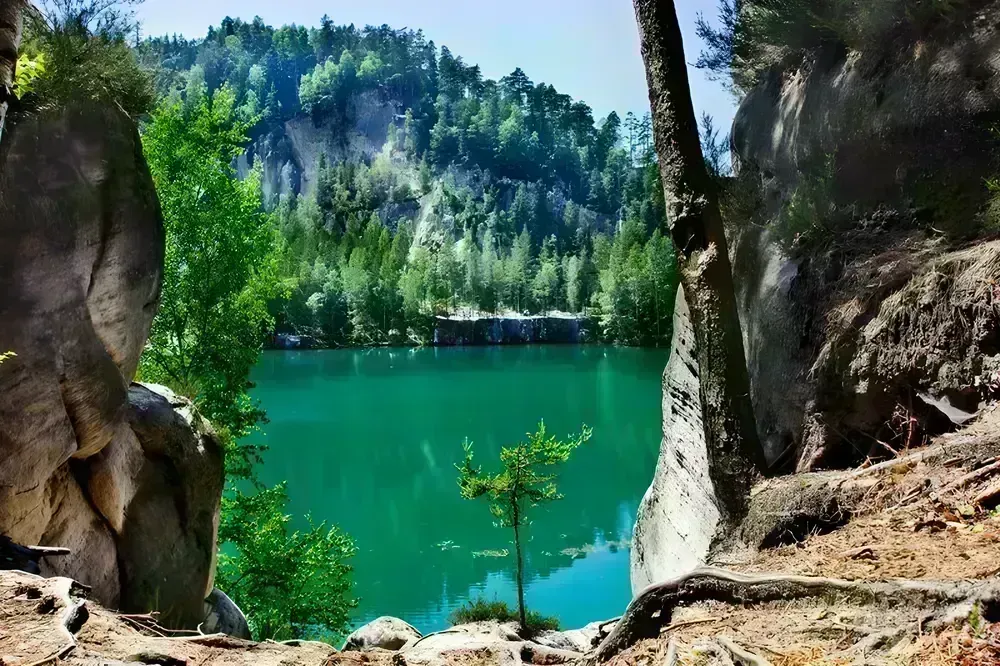
I left Adršpach late in the afternoon, headed back toward the main road. Looking back at the jagged skyline, I was struck by how much human effort it takes to keep a "wild" place looking wild. From the flood in 1971 that created the beautiful **Crystal Lake** (Pískovna) at the entrance to the ongoing push for UNESCO status, this place is a constant balance between letting people in and keeping the environment safe.
If you go, wear sturdy shoes, bring water (there are no shops inside the rock circuit), and take your time. Every rock has a name, from the "Turtle" to the "Grandmother's Armchair." Give yourself the space to actually see the scale of it all. You won't regret the early wake-up call, especially when you're standing in the quiet shadow of "The Lovers," wondering how 90 million years of history can feel so immediate.