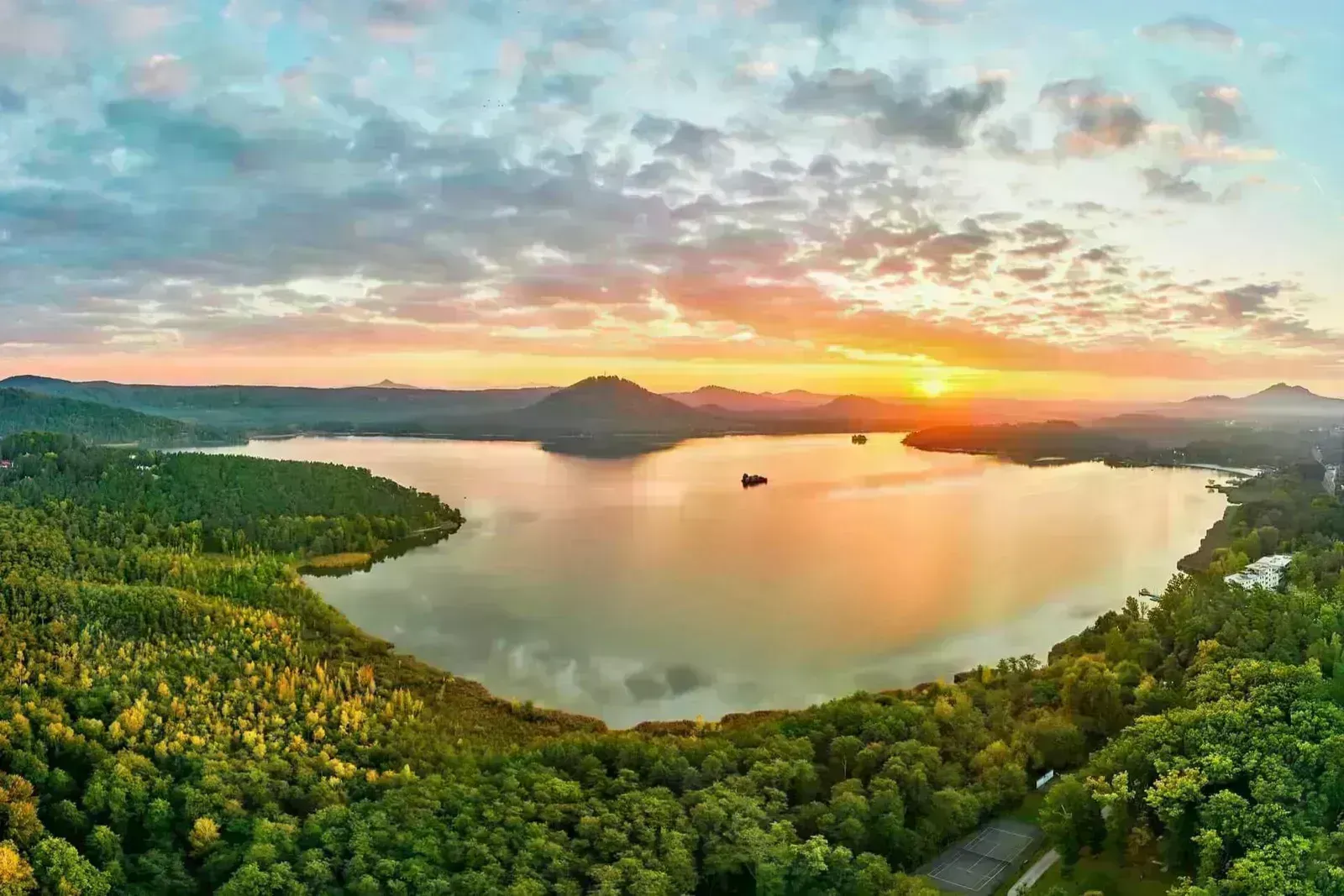
There's a specific kind of morning at Máchovo Lake that every Czech person knows. The fog rolls off the water, the pine trees look like silhouettes, and for a few minutes, everything feels exactly like a scene from a 19th-century poem.
I was staying in a small guesthouse in Doksy recently, and I got down to the shore before anyone else was awake. It's easy to look at this massive body of water and assume it's a glacial wonder. But the first surprise is that Máchovo Lake is actually an artificial pond, founded way back in **1366** by the Holy Roman Emperor **Charles IV**. Originally called *Velký rybník* (Big Pond), it was a massive piece of medieval engineering designed for fish farming and strategic water storage. It wasn't until 1961 that the name was officially changed to honor the man who made it famous.
The "Bad Boy" of Czech Poetry
The lake is named after Karel Hynek Mácha, the quintessential Czech Romantic. His most famous work, *Máj* (May), was published in **1836** and it was actually inspired by these very shorelines. But here's the kicker: when it first came out, the critics *hated* it. Famous Czech figures like Palacký and Tyl called it "nihilistic" and "un-Czech" because it focused on individual despair rather than national pride. Mácha died just months later at only 25 years old, never knowing that his "immoral" poem would become the foundation of modern Czech literature. Sitting on a dew-covered log with a copy of his book, you realize that this isn't just a spot for swimming—it's a cultural landmark where the "soul" of the Czech landscape really took shape.
Bezděz and the Devil's Wall
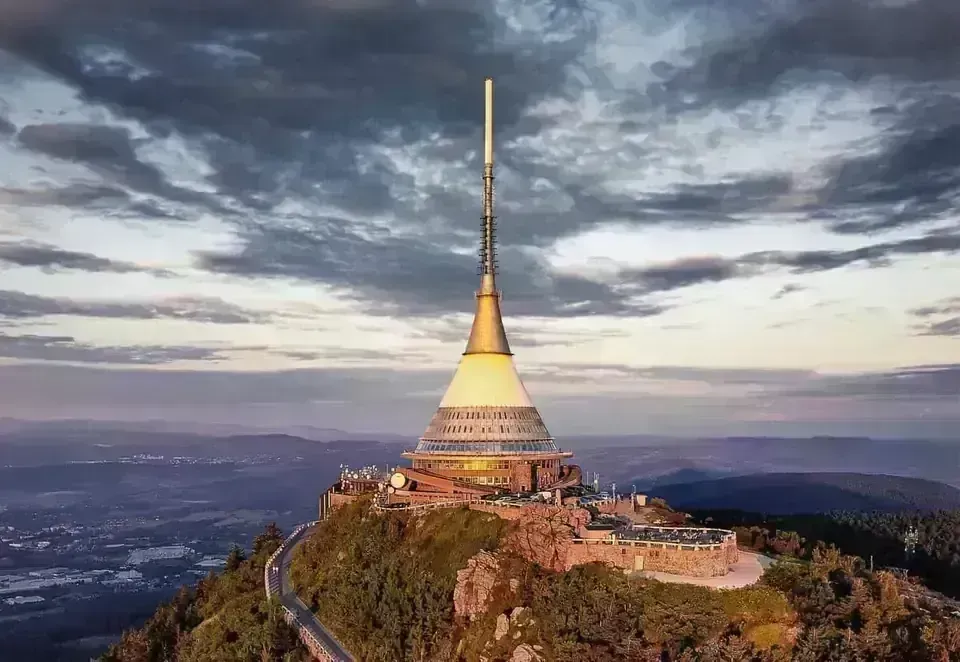
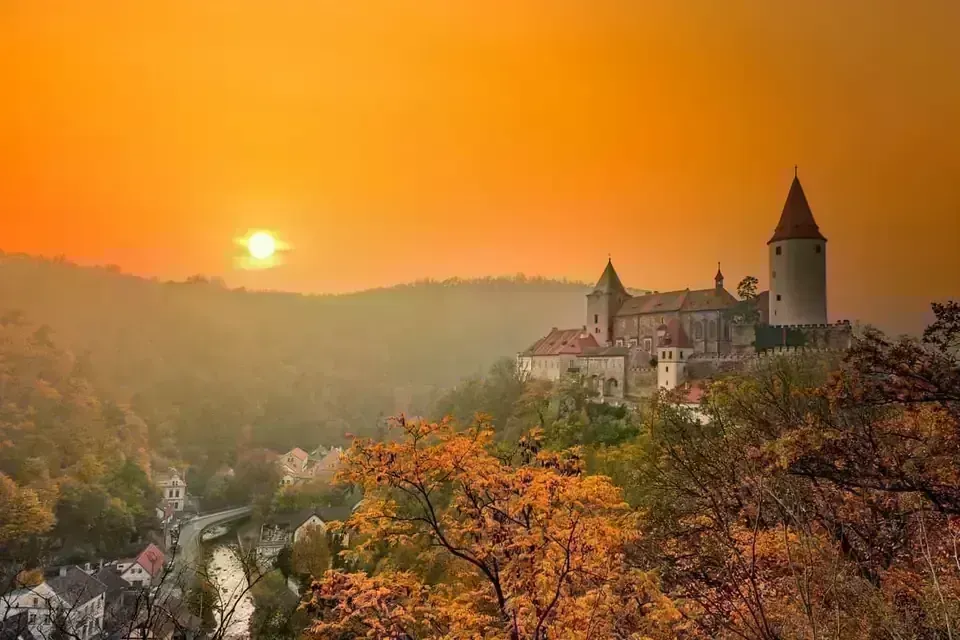
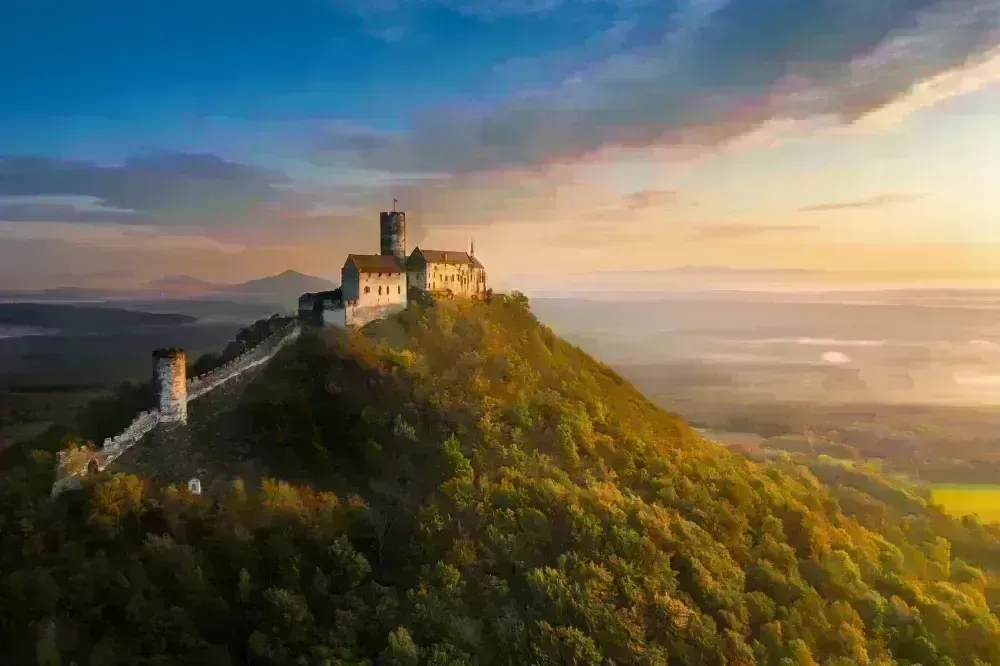
If you look up from the water, you can't miss the jagged silhouette of **Bezděz Castle** dominating the skyline. Founded in 1264, it's one of our most important Gothic fortresses. Local lore is full of stories about "Devil's Tower" and the nearby **Devil's Wall** (Čertova zeď). Legend says the Devil made a bet that he could build a stone wall from here to Ještěd in a single night. He failed just as the first rooster crowed, and in his rage, he kicked the wall down, leaving only the basalt fragments you can still hike past today.
Hiking up to the castle is a right of passage. The trail is steep, but the view of the lake and the surrounding "Crystal Valley" is the best in the region. This area has been a center for glassmaking since the 1300s. In the 19th century, a local genius named Friedrich Egermann revolutionized the industry by inventing "Lithyaline"—glass that perfectly imitated marble and jasper. Every kilometer of these woods is built on that mix of high art and hard labor.
The Bohemian Lido
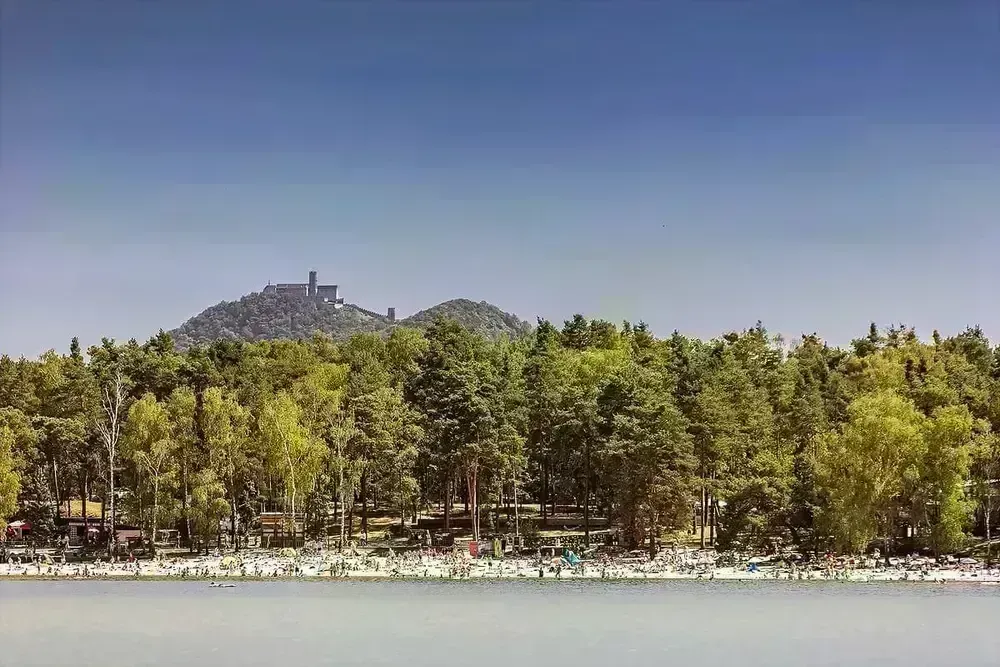
In the summer, the vibe changes completely. The town of **Staré Splavy** becomes what people call the "Bohemian Lido" or "Bohemian Riviera." Back in the early 20th century, this was the elite resort for Prague's high society and film stars. You can still see the elegant functionalist villas tucked between the pines. Today, it's the go-to spot for sailing and windsurfing. I recommend catching one of the four main excursion boats—look for the *Máj*, *Hynek*, *Jarmila*, or *Racek* (named after Mácha's characters)—to get a real sense of the scale from the center of the water.
Jan's Pro-Tip: The Clean Water Battle
One thing you might notice if you visit in late August is a slight green tinge to the water in the shallows. The lake has been fighting "eutrophication" (algae blooms) for years due to nutrient runoff. The locals are taking it seriously, though—they're using aluminum salts to bind the phosphorus and even "biomanipulating" the fish population to keep the water clear. My advice? Visit in June or early July when the water is at its freshest. If you want a quieter spot away from the main beaches, head toward the **Borný** or **Klůček** areas where the pine forests offer more natural shade.
Máchovo Lake is a lesson in endurance. It's survived 800 years of change, from a medieval fish pond to an industrial hub to a poetry muse. Today, the local spirit is still as fierce as it was in Mácha's time. If you go, rent a bike for the 15km loop around the perimeter, stop at the Mácha Museum in Doksy's oldest building, and definitely take a boat out. It's a place that deserves our respect as much as our tourism. Come for the water, but stay for the stories—and maybe bring a sweater, because even in May, the "ghost of Mácha" keeps the lake air surprisingly cool.