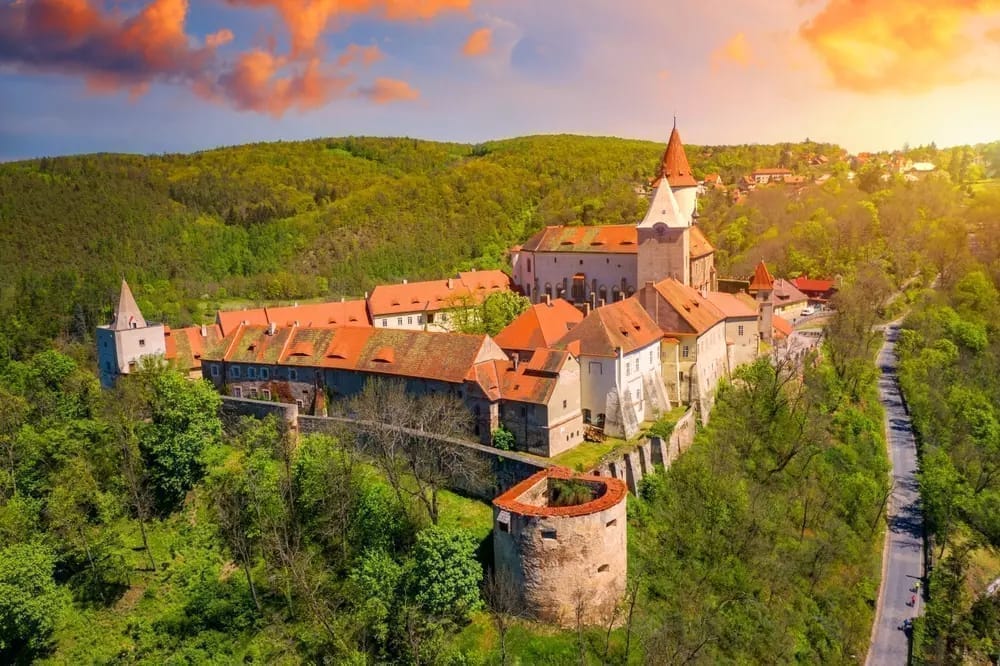
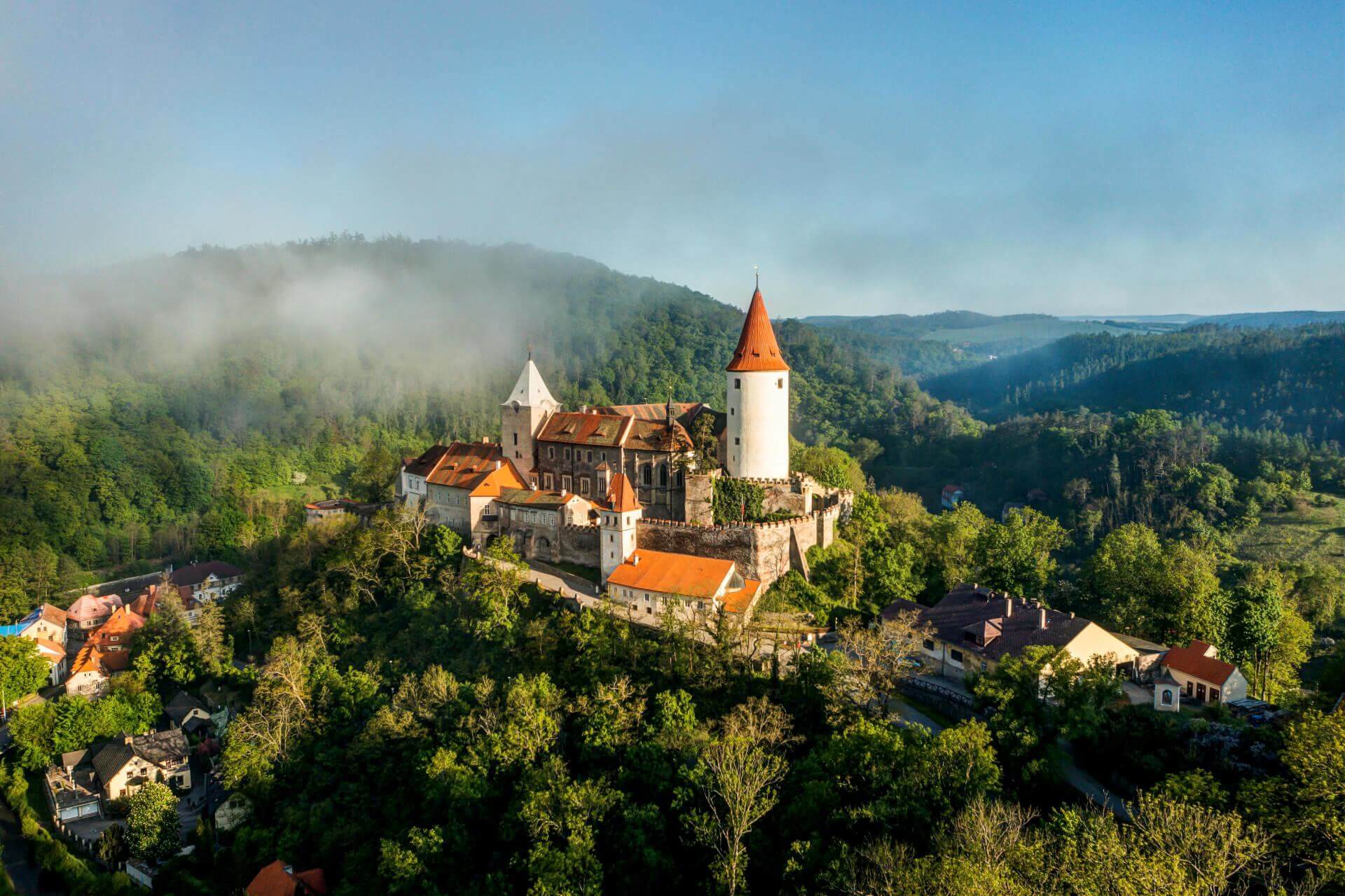
There’s a heavy, serious feel to Křivoklát Castle that you don't find at the more "polished" palaces near Prague. As soon as you walk out of the approach tunnel into the main courtyard, you’re hit by the sheer, brutal bulk of the place. It was built in the 12th century for the Přemyslid dynasty, originally as a royal hunting lodge, but it didn't take long for the kings to realize that these thick, weathered walls were better suited for defense—and for keeping people in.
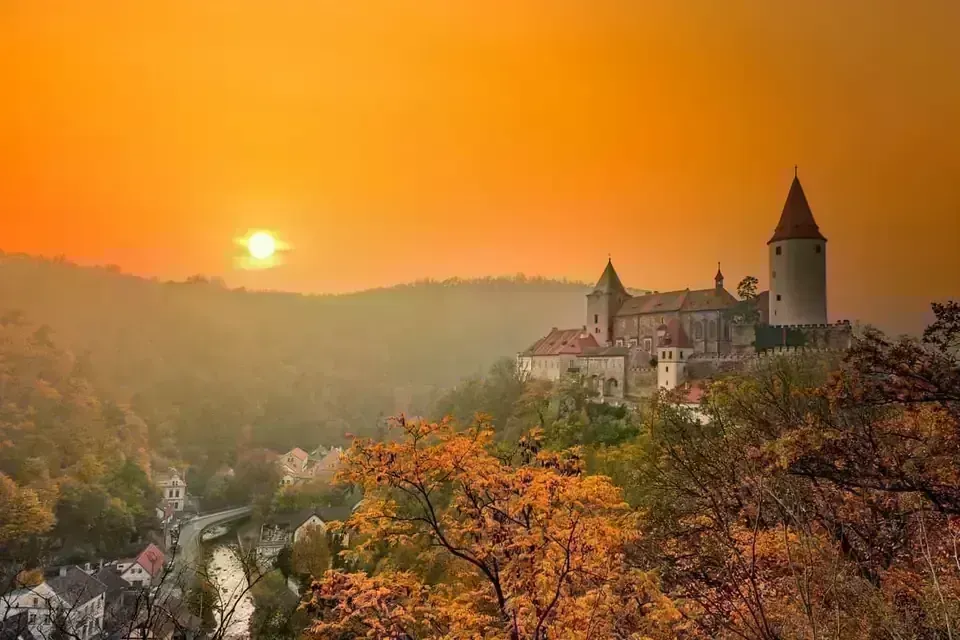
I usually hit the castle in late autumn when the surrounding Central Bohemian forest is a wild mix of orange and scarlet. Against those colors, the dark grey stone walls look even more imposing. It’s a good spot to just stop for a minute and think about how a place built for royal parties ended up becoming one of the most feared prisons in Bohemia. This wasn't a place for the weak; it was a stronghold designed to outlast kings and outrun the elements.
Rails and Ramparts
Getting here is half the fun, and if you're a fan of slow travel, this is your route. It’s about an hour and fifteen minutes from Prague by train, including a quick transfer at Beroun. The ride through the Berounka river valley is one of the most scenic in the country, cutting through limestone cliffs and deep woods that set the mood perfectly. By the time you step onto the platform at the tiny Křivoklát station, you feel like you’ve actually traveled back a few centuries.
The castle is a complete mix of architectural styles, mostly because it was constantly being burned down, knocked over, or added to over the last 800 years. You can see the heavy Gothic influence everywhere, especially in the central tower and the upper courtyard. Our guide, Tereza, showed us some of the recent archaeological finds—pre-Hussite weapons and military gear that they’ve dug up from under the floorboards. During the Hussite Wars in the early 15th century, the castle was a critical prize, besieged and eventually abandoned by the burghers who thought its walls could keep them safe. It’s a reminder that this place wasn't just a pretty backdrop; it was a functioning military machine that saw some of the bloodiest years of Czech history.

The Alchemist’s Cage
The best part of any Křivoklát tour is learning about the "guests" the kings kept here. The castle was the ultimate high-security facility: where you sent the people who were too powerful to kill but too dangerous to leave free. Charles IV—the guy who basically built modern Prague—was actually kept here as a prisoner for three years when he was just a boy. Imagine the future Holy Roman Emperor staring out of these narrow windows, waiting for his life to start while caught in the gears of medieval power plays.
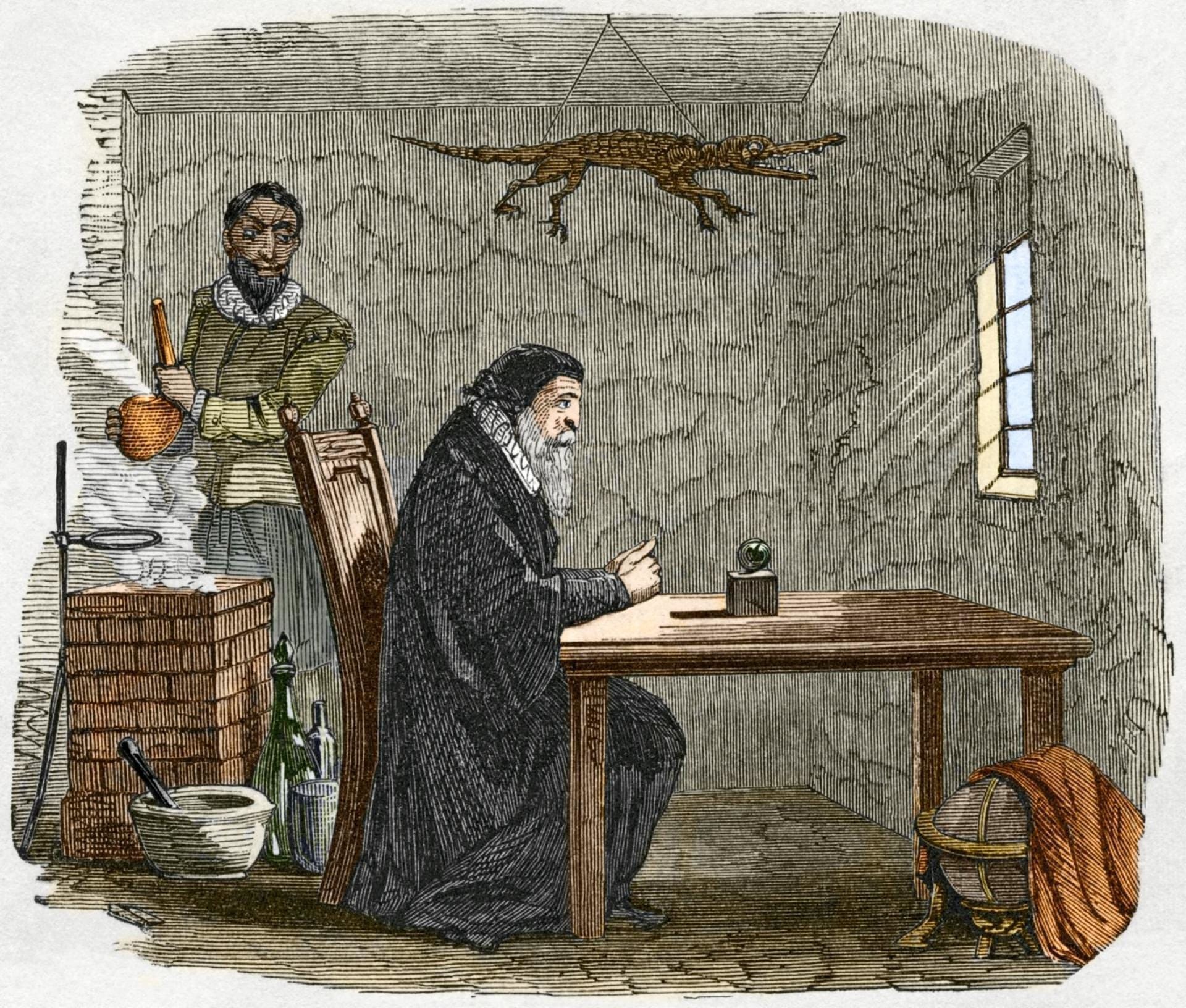
But the real legend is Edward Kelley, the famous English alchemist. He was imprisoned here in May 1591 after he killed an imperial official named Jiří Hunkler in a forbidden duel. Emperor Rudolf II was obsessed with alchemy and hoped that the harsh conditions of Křivoklát would "motivate" Kelley to finally reveal the secrets of the Philosopher's Stone—specifically, how to turn base metals into gold. Kelley eventually tried to escape by jumping out of a high tower window using a rope, but the rope snapped. He fell, shattered his leg so badly it had to be amputated, and his career as a court favorite was over. You can still visit "Kelley’s Dungeon," and the air down there still feels a bit heavy with the ghost of his failed experiments.
The Library of Giants
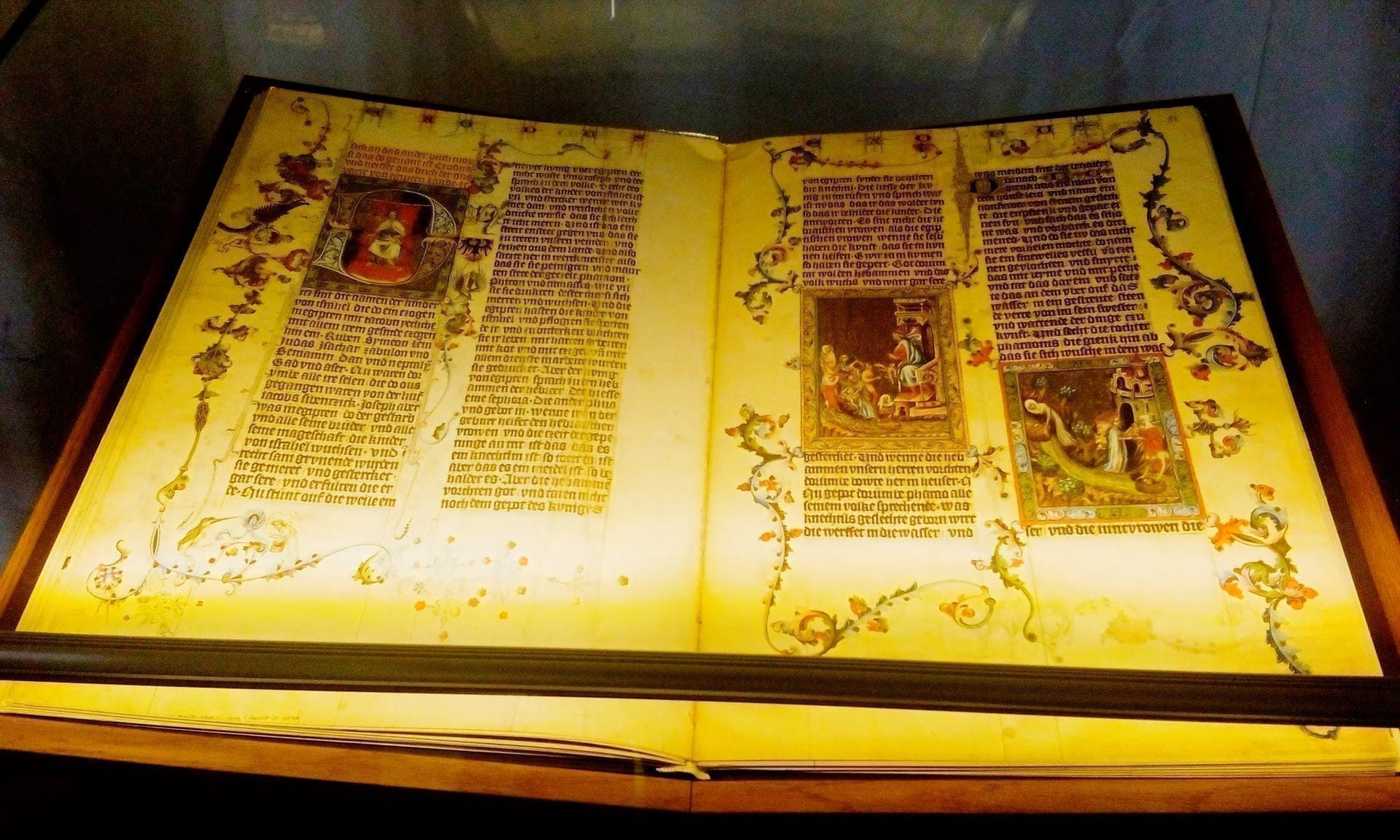
If the dungeons are too much for you, head up to the library. It’s one of the most impressive rooms in Central Europe, holding over 52,000 volumes. Most of the collection was assembled by Prince Karl Egon of Fürstenberg in the 18th century, but the contents go back much further. They’ve got medieval manuscripts dating to the 9th century and a massive collection of incunabula—books printed before 1501. The prize of the collection is the *Augustini Enarrationes in psalmos*, a manuscript from around 1150.
There’s also a 17th-century copy of "Hebrew Didactics" that weighs a staggering 11 kilos and has 2,500 pages. Just looking at the shelves makes you appreciate how much work went into preserving knowledge back then. The portrait gallery is another highlight, with paintings dating back to 1577. It’s a weird contrast to the dark cells below—seeing the fancy, lace-collared nobles in their gold frames just floors away from where prisoners were living in total darkness. The floors here are often uneven and the stairways are steep, so leave the city shoes at home. You’ll want sturdy boots for this one.
Woodcarvers and Svíčková
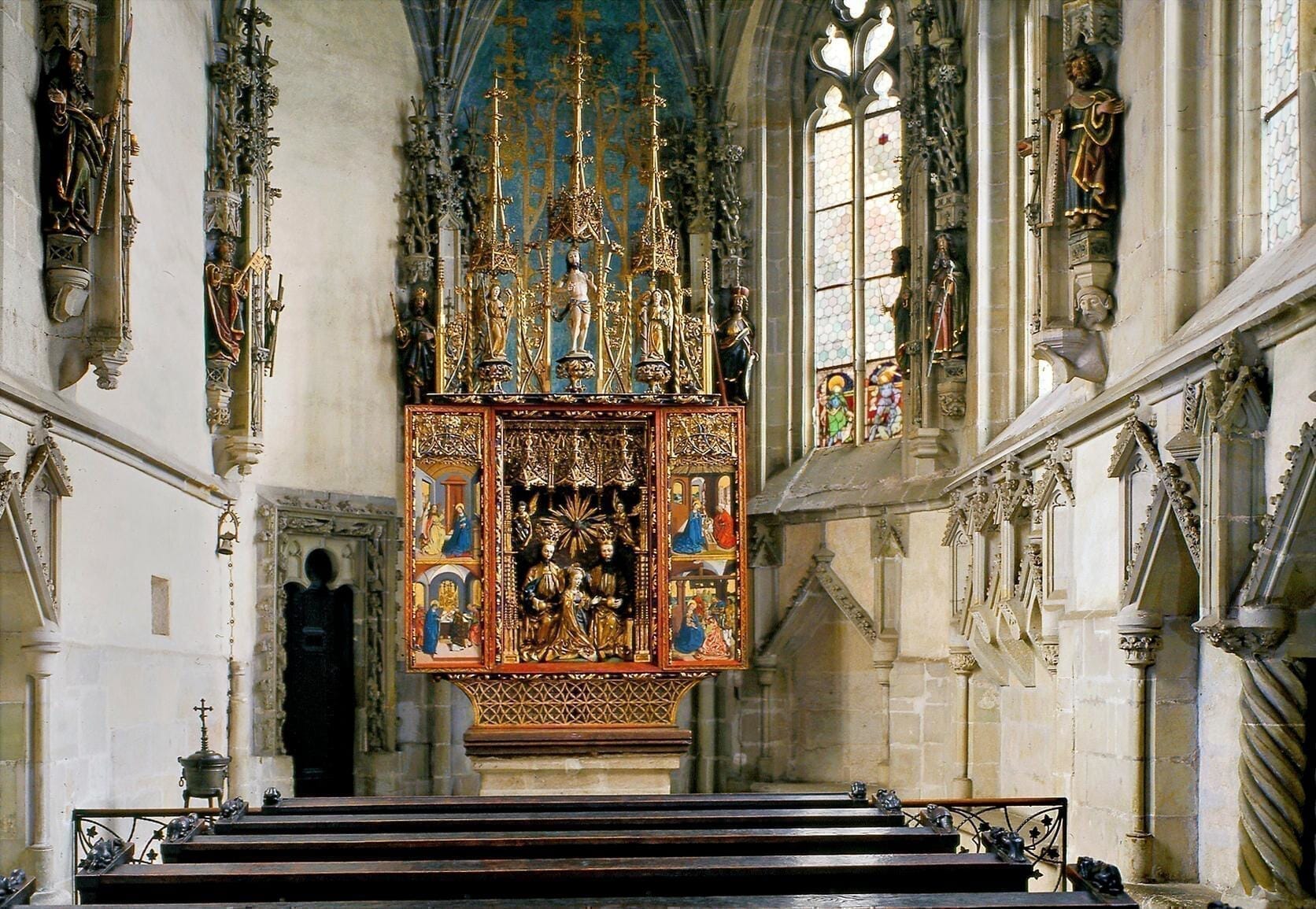
Křivoklát isn't just a relic, though. It’s a living center for Bohemian craft. The Late Gothic Chapel is a masterpiece of woodcarving, featuring an ornate altar and statues of the twelve apostles that are some of the finest Gothic art in the country. If you time your visit for the first week of August, you’ll hit **Křivořezání**—an annual festival where master woodcarvers from all over the region work right in the castle courtyard.
I watched an old artisan carving intricate patterns into linden wood with a speed that didn't seem possible. The name of the festival is a play on the castle’s name and the Czech word for carving (*řezání*). These aren't just cheap souvenirs; they’re a real connection to a culture that’s managed to survive despite centuries of war and neglect. For lunch, head down into the village. Křivoklát is small, but the food is solid. I found a spot serving **Svíčková na smetaně** (tenderloin in cream sauce) that was exactly what I needed after a morning of climbing ramparts. It’s the ultimate Czech comfort food, and eating it in the shadow of the castle walls is the perfect way to end the trip.
Keeping the Stone Alive
My final stop was the preservation workshop. One of the unique things about Křivoklát is that the National Heritage Institute still uses traditional medieval techniques to maintain the walls. I watched a team of masons working on a section of the fortification using the same kinds of lime-based mortars and hand-tools that would have been used 500 years ago. They even run programs for students to teach them about traditional weaving and dyeing wool. It’s not just a museum; it’s a school for keeping the old ways alive.
Křivoklát is one of those places that asks a lot of you—you have to climb the hills, brave the steep stairs, and deal with the dark history. But the payoff is worth it. It’s a deeply authentic slice of Bohemia that hasn't been watered down for the tourist crowds. If you go, **give yourself at least four hours**. There are four different tours you can take, and each one covers a different part of the castle's life. Support the local woodcarvers, eat the goulash in the village, and take a second to really look at the stone. Křivoklát has been through Hussite wars, fires, and centuries of neglect, but it’s still standing. That’s a legacy worth a train ride.